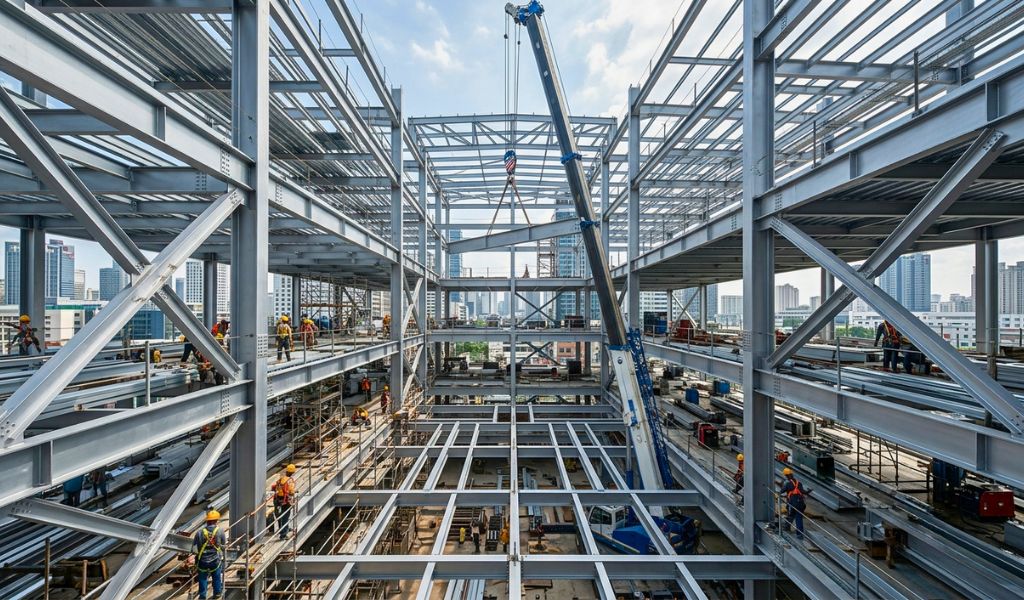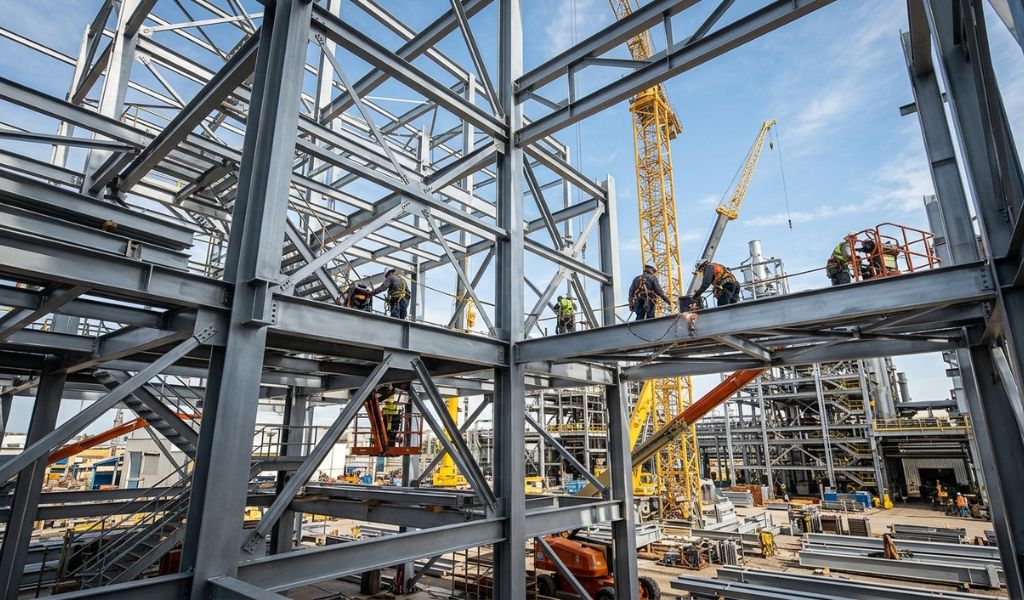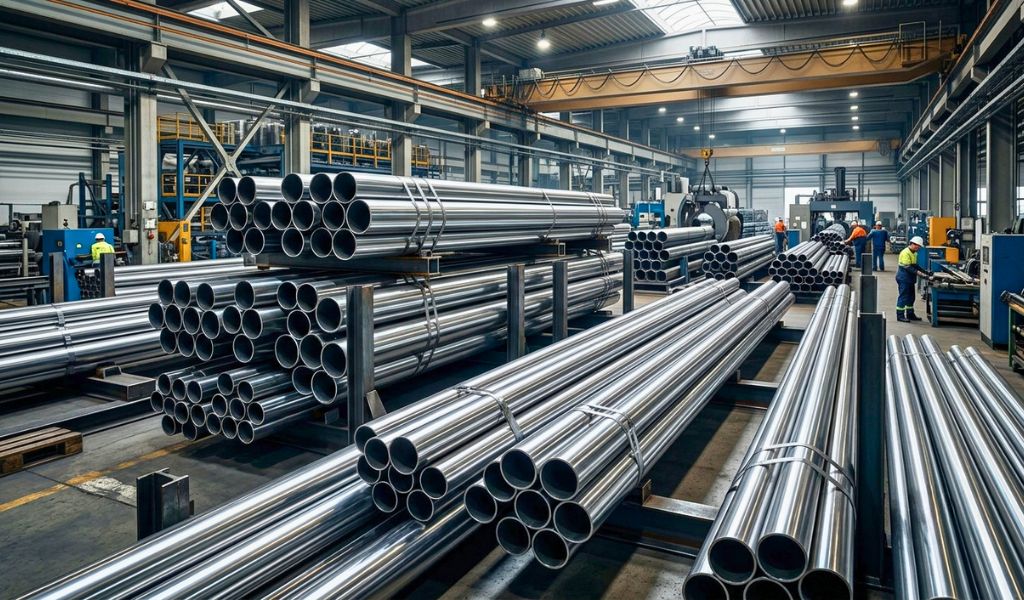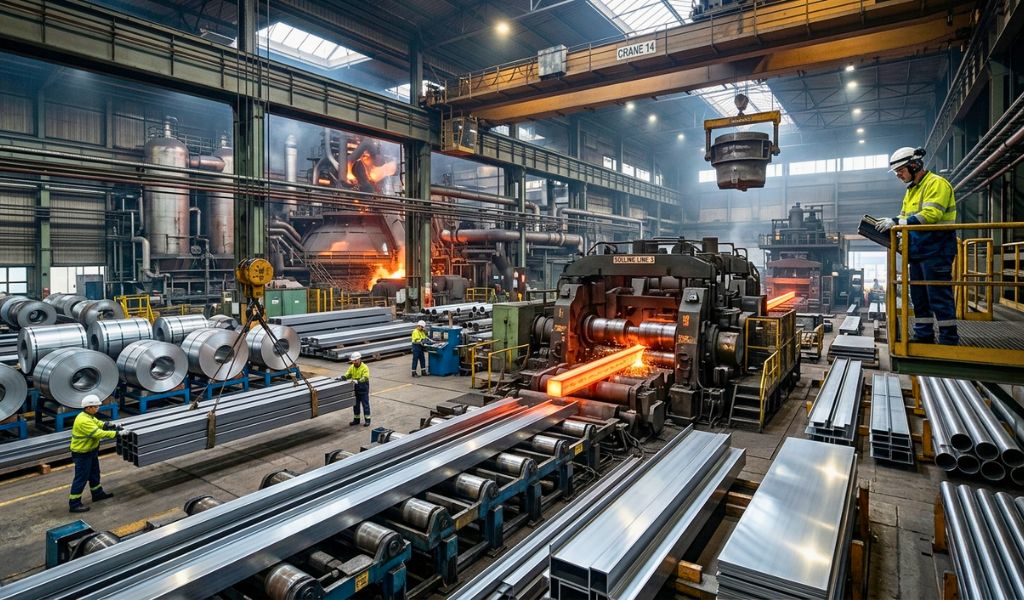
Steel is a fundamental material across Jeddah’s construction, infrastructure, manufacturing, and industrial sectors. With projects demanding materials that offer strength, durability, and reliability, understanding how steel is manufactured can help businesses make better purchasing decisions. It allows them to assess product quality, understand key material properties, and select suppliers capable of meeting the specific demands of their projects. From raw material selection to the production of finished steel products, modern manufacturing processes are designed to deliver precision, efficiency, consistency, and quality at every stage.
Mitwalli Steel Products Factory Co is the trusted manufacturer of steel products for industrial owners looking for a well-established manufacturing environment that adapts to virtually any industrial need.
Quick Summary
-
The process by which a steel product is manufactured by processing raw materials to derive functionality is termed the steel manufacturing process.
-
Modern production solves this issue by adding modern machinery to rigorous quality-control processes.
-
This architecture has been shown to improve dimensional accuracy, productivity, and material efficiency with technology.
-
A quality manufacturer should include your product with consistent quality, specifications, and service.
-
Choosing a capable supplier can lead to a more efficient project planning and procurement process, as they enable the experienced engineers.
What is steel manufacturing, and how does it work?
Steel production is the process of producing steel from iron ore and steelmaking to produce steel for construction, engineering, fabrication, and industrial manufacturing. Steel manufacturing involves several steps: preparing raw materials, producing molten steel, refining the chemical composition, and casting and shaping the product.
Depending on what product is needed from the steel, it can then be rolled, cut, formed, coated, or finished. Your manufacturing process has a few checkpoints along the way, and it ensures that your delivered products are within the designed dimensions and that the performance criteria are met.
Why does quality matter?
Properties such as structural strength, durability, safety, and project costs may vary by steel quality. Reliable materials for demanding applications are thus supported by consistent manufacturing.
How has steel manufacturing changed in recent years?
The industry has transitioned to higher levels of automation, enhanced precision, efficiency, and process control. Today, most steel is produced by systems where the process is controlled by computers with more advanced monitoring, and thus a lot of variations between production cycles are suppressed.
Simultaneously, manufacturers are paying more attention to material efficiency, energy settings, waste reduction, and sustainable production methodologies. These innovations have contributed to more precise and adaptable manufacturing of industrial steels for a variety of applications.
What technologies are used in modern steel manufacturing?
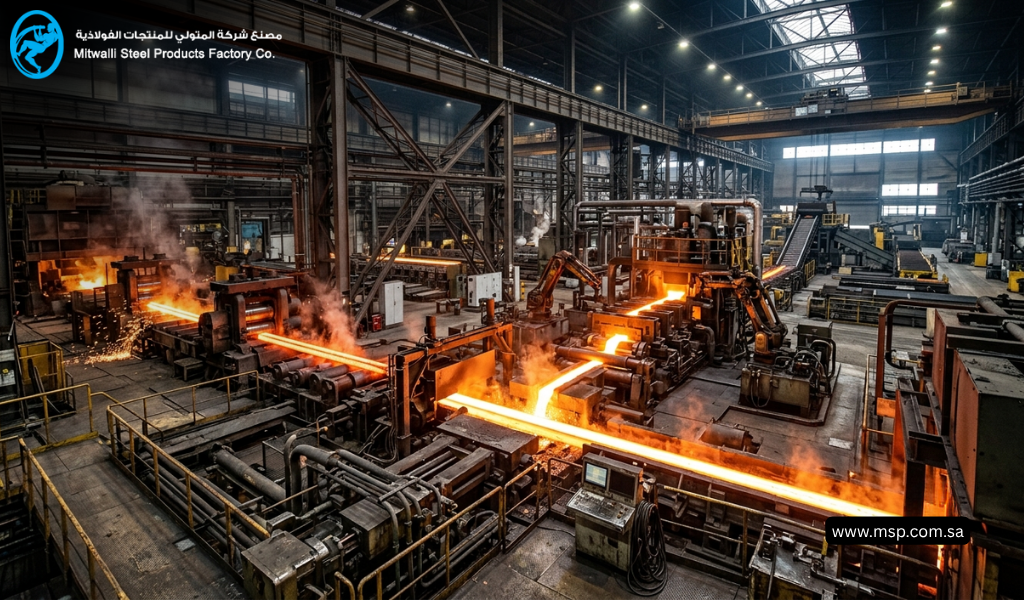
Modern facilities combine all of the above tools: automated equipment, computer monitoring and testing systems, and computerized production processes. These technologies help mitigate repeatable production mistakes while increasing uniformity.
Key developments in steel production technology include:
-
Automated material handling and processing
-
Computer-controlled rolling and forming equipment
-
Digital measurement and quality monitoring
-
Advanced cutting and fabrication systems
-
Data-based production and maintenance monitoring
Collectively, these technologies enable manufacturers to meet tighter tolerances and provide products that are manufactured within defined parameters.
What should I look for when choosing a steel manufacturer?
The right supplier should be assessed on more than price. Businesses should consider manufacturing capabilities, product range, quality-control practices, production capacity, technical expertise, and delivery reliability.
When evaluating the steel manufacturers in Saudi Arabia, inquire whether the manufacturer can cater to your specifications or whether its production processes align with your application.
|
Factor |
What to Check |
Why It Matters |
|
Product quality |
Specifications and testing |
Supports reliable performance |
|
Manufacturing capability |
Equipment and production capacity |
Helps meet project requirements |
|
Technical expertise |
Experience and skilled personnel |
Supports accurate production |
|
Quality control |
Inspection procedures |
Improves consistency |
|
Delivery support |
Lead times and logistics |
Helps avoid project delays |
|
Custom requirements |
Cutting, forming, or other services |
Provides greater flexibility |
Also read:- How to Choose the Right Steel Factory in Saudi Arabia for Your Project?
Mitwalli Steel Products Factory Co can be considered when businesses require a manufacturer with experience in supplying steel products for different industrial needs.
How does modern steel production improve efficiency?
Modern systems optimize efficiency with automation, precise process controls, and more resource-efficient operations. Because automated machinery can maintain the same conditions throughout the entire production process, digital monitoring provides early recognition of potential issues for manufacturers.
Efficient industrial steel manufacturing can also reduce the amount of material wastage and improve production planning. Customers may experience more consistent quality, faster turnaround, and easier project management.
Conclusion
The foundation of steelmaking you need for dependable steel supplies, the steel production process and technology, the steel quality definition, and steel supplier capabilities. Regardless of whether the need is for construction, fabrication, infrastructure, or industrial applications, a manufacturer that has the appropriate equipment, quality controls, and technical expertise can make sourcing easier.
Companies looking for reliable steel products in Jeddah can talk to Mitwalli Steel Products Factory Co about their specifications to see what manufacturing and supply options are available.
FAQs about steel manufacturing
1. What is steel manufacturing?
Steel manufacturing is the process of producing steel from raw materials and converting it into finished products through refining, casting, shaping, and finishing.
2. What should I check before buying steel products?
Check the steel grade, dimensions, specifications, quality-control procedures, manufacturing capability, quantity, and expected delivery time.
3. Why is modern steel production more efficient?
Modern production uses automation, digital monitoring, precision equipment, and improved process control to increase consistency and reduce waste.
4. How do I choose a reliable steel manufacturer in Saudi Arabia?
Compare manufacturing capabilities, product quality, technical expertise, quality-control practices, production capacity, and customer support rather than focusing only on price.