In hot and humid environments, plumbing systems face conditions that can affect their performance and service life. High temperatures, thermal expansion, corrosion, and fungal growth can all influence pipe behaviour over time. Steel pipes provide the strength and durability needed for demanding applications, making them a suitable choice when the material, coating, and specifications are selected to match the environment.
Whether in commercial buildings, industrial plants, or infrastructure projects, steel piping is a reliable choice. Knowing the different varieties and their uses facilitates in constructing a plumbing system that is protected, efficient, and durable.
Quick Summary
-
Steel pipes offer strength and durability for demanding plumbing environments.
-
Corrosion protection is especially critical in hot or humid climates.
-
The pipe grade, wall thickness, diameter, and connection method must be specific to the project.
-
Hollow steel pipes are used to meet various metallic structure and fabrication needs.
-
Professional advice can help ensure the selected pipes meet project specifications.
Why Does Climate Matter When Choosing Plumbing Pipes?
Extreme temperatures can lead to expansion and contraction of materials, placing additional stress on your joints and connections. For pipes used outdoors, where exposure to high humidity and moisture accelerates corrosion, even short-term exposure can be a problem.
Thus, steel pipe for construction must be evaluated in relation to its application surroundings. Use of protective coatings, proper grades, and proper installation can extend service life dramatically.
Direct sunlight, temperature changes, and contact with corrosive elements are also important for any exposed plumbing or infrastructure.
Which Types of Steel Pipes Work Well in Hot Climates?
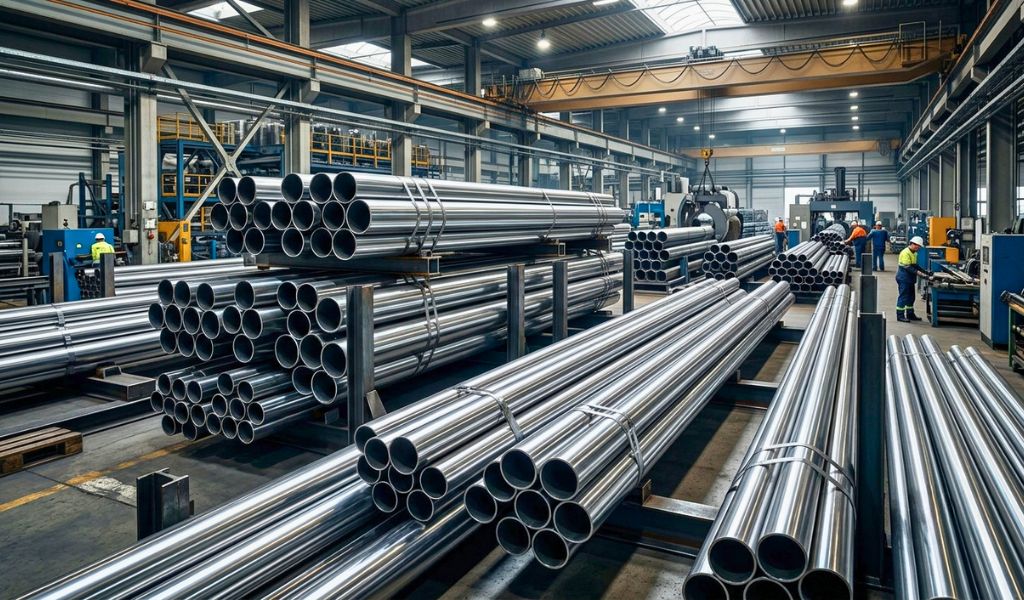
Carbon Steel Pipes
Carbon steel is used in many applications where strength and durability are important. This material, when specified with a suitable grade and corrosion protection, can be suitable for industrial and building applications.
Galvanised Steel Pipes
Galvanised pipes are coated with zinc to help resist corrosion. They can be helpful in applications where exposure to moisture is a possibility however, these types of applications depend on the type of plumbing service and environmental conditions involved.
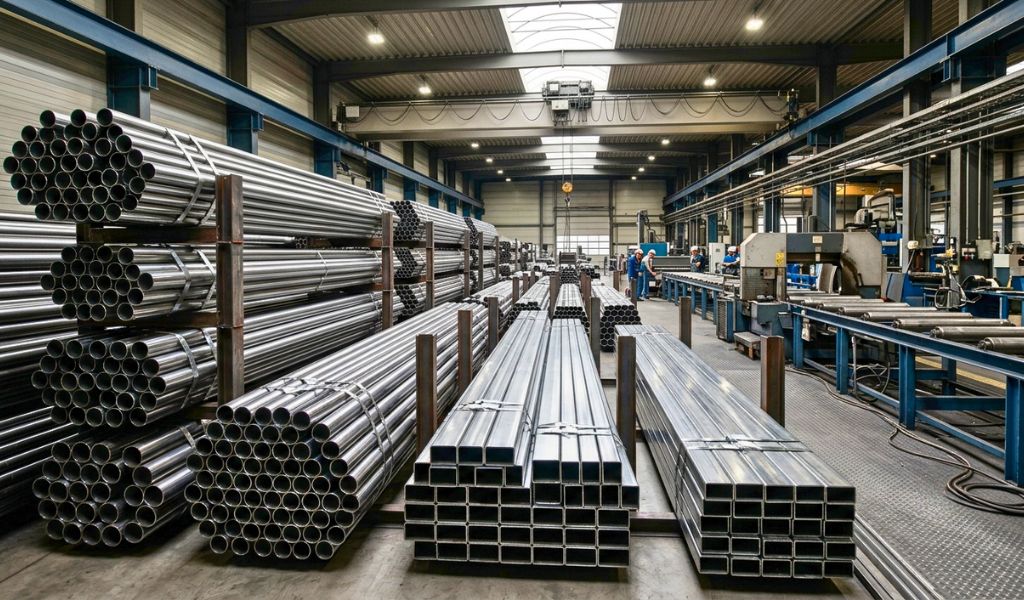
Hollow Steel Pipes
Hollow steel pipes have been produced in all shapes, sizes, and wall thicknesses of the walls. Although most are used for structural and fabrication purposes, you can find them being used in a variety of engineering projects.
How do steel pipes improve structural strength?
Steel is a lightweight and strong material, which means that pipes made from steel and specified correctly can withstand very high loads and mechanical stresses. Structural steel pipes can be used in frames, supports, columns, and other applications where durable structural performance is required.
Because of their strength, dimensional stability, and flexibility in fabrication, steel pipes and tubes are ideal for a host of construction and engineering needs.
Which type of steel pipe is best for industrial applications?
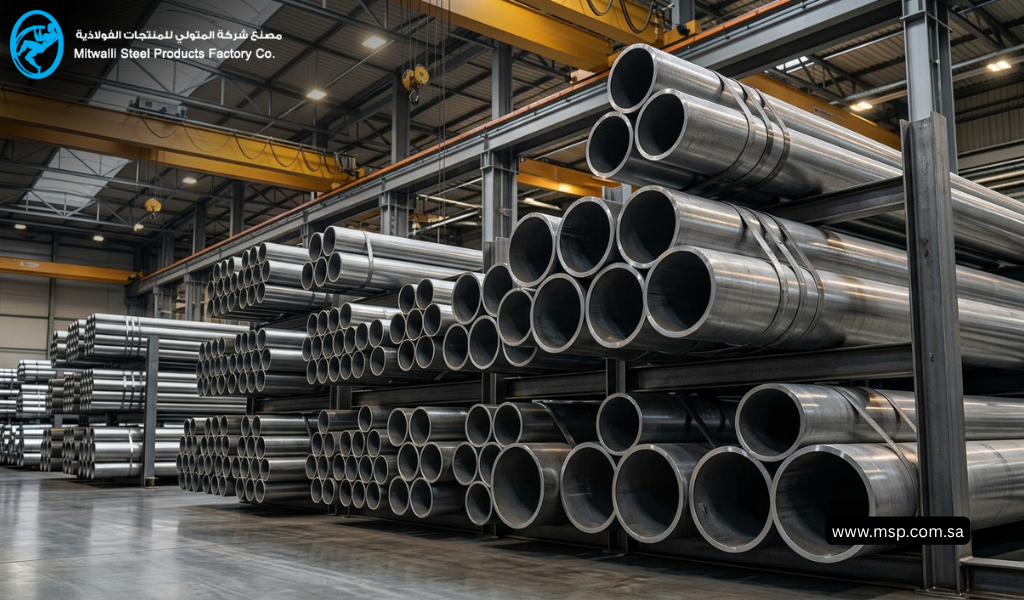
No single steel pipe is the best solution for all industrial projects. The right choice depends on pressure, temperature, fluid, corrosion resistance, rim, wall thickness, and general standards that can be applied.
Some common uses of steel pipe include industrial frame systems creating utility infrastructure, as well as general-purpose supports, construction, and fabrication projects. Carbon steel may fill the needs of many heavy-duty applications, and alternative coated or specially specified products may be used in conjunction with design for some of the tougher environments.
Mitwalli Steel Products Factory Co can help businesses assess suitable steel products according to project requirements and specifications.
How do I choose the right steel pipes for a plumbing project?
Start with the operating conditions rather than the pipe alone. Consider:
-
Temperature: Account for normal and maximum operating temperatures.
-
Pressure: Select a suitable wall thickness and grade for the required pressure.
-
Corrosion Exposure: Consider coatings or other protective measures where necessary.
-
Dimensions: Confirm the required diameter, length and wall thickness.
-
Installation: Check whether welding, threading or another joining method is appropriate.
-
Standards: Ensure products meet the relevant project and industry requirements.
Even more so, leveraging an expert steel supplier can prevent errors on specifications and assist you to maximize your procurement processing times. Mitwalli Steel Products Factory Co is a manufacturer of steel products for diverse industrial and construction needs.
Also read:- How Do I Choose the Right Steel Pipe for Plumbing Applications?
Practical Information Table
|
Requirement |
Recommended consideration |
Why it matters |
|
Hot environment |
Suitable steel grade and protection |
Helps maintain reliable performance |
|
Humid conditions |
Corrosion-resistant coating where appropriate |
Helps reduce corrosion risk |
|
High mechanical loads |
Structural steel pipes |
Provides strength for demanding applications |
|
General fabrication |
Hollow steel pipes |
Offers versatility and easy fabrication |
|
Industrial service |
Grade, pressure and temperature rating |
Supports safe, suitable operation |
|
Construction projects |
Certified, specification-compliant products |
Helps meet project requirements |
Conclusion
The best steel pipes for a plumbing project in a hot climate depend on temperature, pressure, moisture, corrosion exposure, and the intended application. Choosing the right material, size, and treatment would contribute to the intended long-term performance.
Mitwalli Steel Products Factory Co is a business that, in the construction, industrial, or fabrication sector, may be able to assist you with your needs. Speaking with an experienced supplier about your specification will allow you to choose a solution wisely.
FAQs about Steel Pipes
1. Are steel pipes suitable for hot climates?
Yes. Steel pipes can perform well in hot climates when the appropriate grade, dimensions, and corrosion protection are selected for the operating environment.
2. What steel pipe is best for plumbing?
The best pipe depends on pressure, temperature, fluid, corrosion exposure, and applicable standards. Carbon steel and galvanised options may suit different applications.
3. Do steel pipes expand at high temperatures?
Yes. Steel expands as temperature increases. Proper engineering, joint design, and installation allowances should account for thermal movement.
4. Are hollow steel pipes suitable for construction?
Yes. Hollow steel pipes are widely used for structural frameworks, supports, fabrication, and other construction-related applications, depending on their specifications.