A building system plays a vital role in determining a structure's strength, durability, functionality, and long-term performance. Steel building systems are a preferred option for industrial and commercial projects due to their structural dependability, design versatility, and speedy construction. Steel can satisfy demanding building requirements in everything from factories and warehouses to workshops and commercial facilities.
Steel structures can also accommodate large open spaces, heavy equipment, and changing operational requirements. Selecting the right steel building components and structural steel sections allows companies to maximise space and create an environment that supports productivity.
Understanding these systems can help developers, contractors, and project owners make informed choices regarding construction.
Quick Summary
-
Steel building systems provide strength and durability for industrial and commercial structures.
-
Standardised steel building components can support efficient fabrication and installation.
-
Structural steel sections allow flexible designs and large, open interior spaces.
-
Quality steel construction materials can help reduce maintenance requirements over time.
-
Choosing the right supplier and specifications is essential for safe, reliable construction.
What Is a Steel Building System?
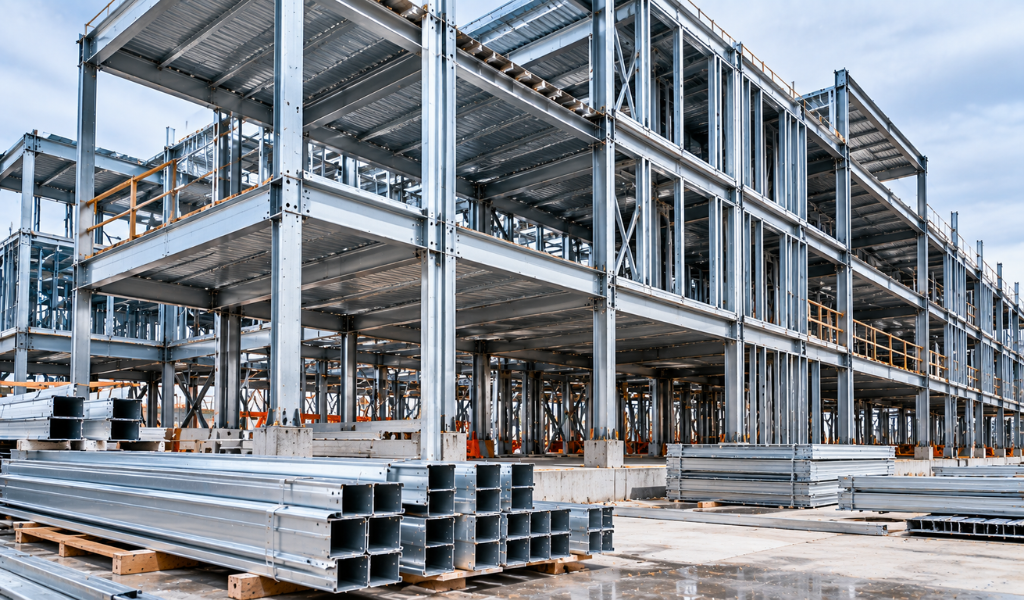
A steel building system is a structural system where steel members work together to support a building and safely transfer its loads to the foundations.
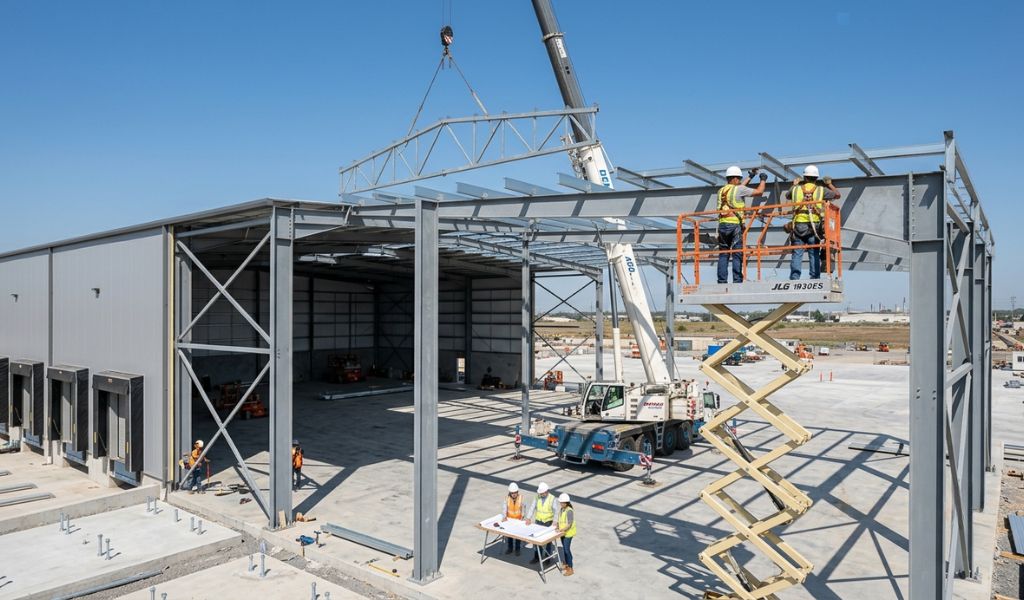
The system may include columns, beams, roof trusses, bracing, connections, and other fabricated elements depending on the project requirements. Each part has a specific role in maintaining structural integrity.
Common Steel Building Components
Typical steel building components include:
-
Columns: Transfer loads from beams and roof structures to the foundations.
-
Beams and girders: Support floors, roofs, and other structural elements.
-
Roof trusses: Span wider areas while supporting roof loads.
-
Bracing systems: Improve stability against lateral forces, including wind.
-
Connection plates and fasteners: Join structural elements securely.
The appropriate combination depends on building dimensions, intended use, loading conditions, and applicable engineering standards.
Why Is a Building System Important for Industrial and Commercial Construction?
A good building system allows businesses to arrive at an optimum balance between structural performance, construction efficiency, and future operational requirements.
1. Strength and Structural Reliability
Industrial buildings may have to support machinery, storage racks, production equipment, and large roof loads. Structures supporting commercial facilities shall also retain integrity in expected environmental and occupancy conditions.
Steel’s high strength-to-weight ratio allows engineers to design structural frameworks that can bear demanding applications. But the end performance depends on engineering calculations, material grades, connection details, and proper installation.
2. Faster Fabrication and Installation
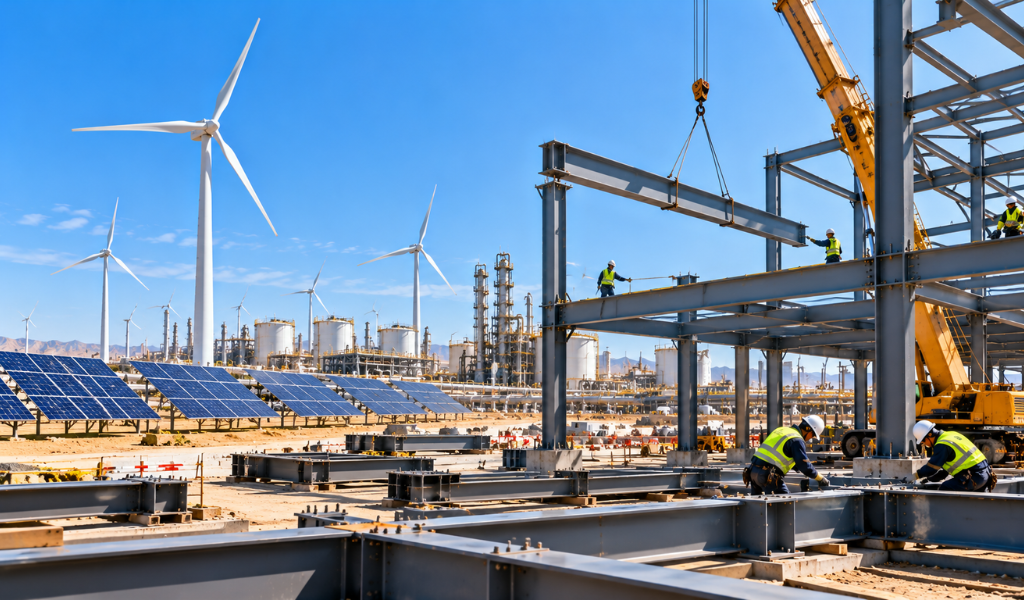
Many steel components can be manufactured in a controlled factory environment and then shipped to the construction site. This allows foundation work to be carried out at the same time as the cutting, drilling, welding, and assembly preparation.
This can reduce on-site fabrication, improve consistency, and help projects stay on schedule if planned and coordinated well.
3. Flexible Design and Space Utilisation
Steel frames can span large distances and produce open floor plans. They are suitable for warehouses, factories, distribution centers and commercial buildings.
Good design of structural steel sections enables project teams to develop layouts that can accommodate the movement of equipment, storage operations, and changes in building use over time.
4. Durability and Long-Term Value
Properly designed, installed, and maintained, steel structures can provide long service lives. In humid, chemical, or coastal environments, appropriate protective coatings and corrosion-control measures are especially critical.
The initial cost will depend on the material specification, complexity of fabrication, and market prices. A well-designed steel structure can provide long-term value through reliable performance and manageable maintenance.
How Do Steel Construction Materials Support Industrial Projects?
Selecting the appropriate materials for steel construction is critical to satisfy the structural and functional needs of a building.
Material selection shall depend on the intended application, design loads, environmental conditions, and applicable quality standards. Engineers may specify different grades, sizes of sections, and protective treatments as per the requirements of the project.
For instance, a manufacturing plant might need a strong structure to hold heavy equipment, while a warehouse might emphasise long spans and efficient storage arrangements.
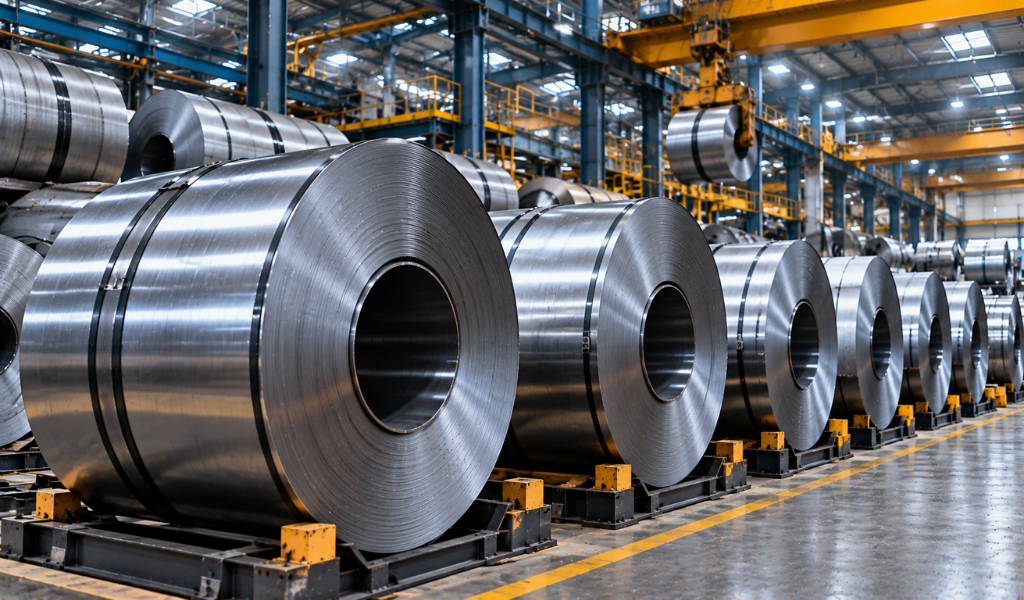
Steel components for industrial buildings must be manufactured to the required dimensions and tolerances. You can count on the quality to be the same, so the parts will fit together right when you install them.
What Should You Consider When Choosing Industrial Steel Building Solutions?
When you are thinking about a steel building solution, consider the practical needs of the project and not just the cost of the material.
Key Factors to Evaluate
-
Structural requirements: Verify building dimensions, loading, roof design, and intended use with qualified structural engineers.
-
Material quality: Verify material grades and specifications, traceability, and quality control procedures.
-
Fabrication Capabilities: Confirm that the supplier has the capacity to produce the parts as per the drawings and tolerances of the project.
-
Corrosion protection: Choose suitable coatings or other protection measures depending on the local weather and operating conditions.
-
Installation planning: Transportation, lifting equipment, site access, and coordination with other building works should be considered.
-
Expansion possibilities: If the business is likely to grow, the original design can be extended, or the layout can be changed.
For projects in Saudi Arabia, it is also important to consider local building codes, environmental factors, and relevant structural design criteria.
Practical Comparison: Which Steel Building Solution Is Suitable?
|
Building requirement |
Suitable steel system or component |
Main benefit |
|
Warehouses and distribution centres |
Steel frames and long-span roof trusses |
Open space for storage and movement |
|
Manufacturing facilities |
Heavy-duty columns, beams and bracing |
Support for demanding structural loads |
|
Commercial buildings |
Steel frames with suitable floor and roof systems |
Flexible layouts and efficient space planning |
|
Workshops and production units |
Fabricated frames and structural sections |
Adaptable working areas |
|
Buildings in corrosive environments |
Steel components with suitable protective coatings |
Improved resistance to corrosion |
Note: The final system should be selected through project-specific engineering assessment. The table provides general guidance rather than a substitute for structural design.
Also read: Where Can I Buy Modular Building Systems for Residential Projects in Jeddah?
How Can the Right Steel Supplier Improve Project Outcomes?
A reliable supplier is much more than a steel supplier. The supplier’s fabrication expertise, quality procedures, technical coordination, and ability to meet project specifications can affect the overall construction process.
Request applicable product specifications, fabrication details, quality documentation, and delivery schedules before placing an order It is also worth verifying that the supplier can meet the project’s needs for customised dimensions and component types.
Mitwalli Steel Products Factory Co is a support to the steel construction industry with a range of products including structural steel building components. Businesses with industrial or commercial development plans can check out the available products and discuss their project requirements to find the suitable options.
Conclusion
The construction system is an important factor for industrial and commercial projects to achieve structural strength, design flexibility, and efficient construction. Steel has practical advantages for buildings that require large open spaces, dependable load-bearing performance, and the ability to respond to changing operational requirements.
The best results are achieved by selecting the right steel building components, specifying the right materials, and working with experienced engineering and fabrication teams. By assessing quality, corrosion protection, installation requirements, and long-term use, project owners can make better-informed decisions about their steel construction needs.
If you are building a warehouse, factory, workshop, or commercial facility, look through the relevant structural steel building components and talk to a qualified supplier to discuss the specifications of your project.
FAQs on Steel Building Systems
1. What is a building system in steel construction?
A building system is an arrangement of structural components, such as columns, beams, trusses, and bracing, that work together to support a building and transfer loads safely to its foundations.
2. Why are steel building systems popular for industrial buildings?
They offer a high strength-to-weight ratio, design flexibility, opportunities for factory fabrication, and the ability to create large open spaces for machinery, storage, and production activities.
3. What are the main steel building components?
Common components include columns, beams, girders, roof trusses, bracing, connection plates, and fasteners. The exact combination depends on the building's design and intended use.
4. Are steel building systems suitable for commercial buildings?
Yes. Steel systems can support offices, retail facilities, workshops, and other commercial properties by providing flexible layouts and adaptable structural designs. The system must be engineered for the specific building requirements.