Steel constructions play an important role in the development of renewable energy and modern industrial projects. Steel is the material of choice for a range of demanding applications supporting solar panel installations, factories and warehouses, and equipment platforms because of its strength, durability, and flexibility. In Saudi Arabia, where industrial growth and renewable energy projects are creating new infrastructure needs, steel construction is a viable option for many projects.
Selecting the appropriate materials helps companies to manage construction schedules, fulfill structural requirements, and anticipate long-term performance. Knowing the benefits of steel and choosing the right products contributes to the development of a reliable infrastructure for many industrial applications.
Quick Summary
-
Steel provides strength and structural stability for demanding industrial environments.
-
Renewable energy projects use steel for equipment supports, mounting systems, and access structures.
-
Prefabricated steel components can simplify installation and improve project coordination.
-
Proper material selection and corrosion protection help extend the service life of steel structures.
-
Working with an experienced supplier helps businesses identify suitable structural steel products for their requirements.
Why Steel Structures Are Ideal for Industrial and Energy Projects?
Steel constructions are popular for providing structural strength, design flexibility, and practical installation. These qualities make steel the ideal choice for projects where safety, strength, and long-term reliability are essential.
1. Strength for Demanding Applications
Industrial facilities often have heavy machinery, storage systems, production lines, and equipment platforms. With steel, engineers can specify the proper grade, section size, and connection details to give these applications the load-bearing capacity they require.
Steel supports are used in solar panel mounting systems, equipment frames, and maintenance platforms in renewable energy projects. The design must consider operational loads, wind conditions, and the specifics of each installation.
2. Flexibility in Design and Fabrication
Steel can be cut, formed, welded, and assembled into many different configurations. This flexibility enables project teams to develop structures that fit site dimensions, equipment layouts and operational needs.
Engineers can use appropriate structural steel products to design specific solutions for industrial buildings, access platforms, support frames and other special applications.
3. Efficient Construction and Installation
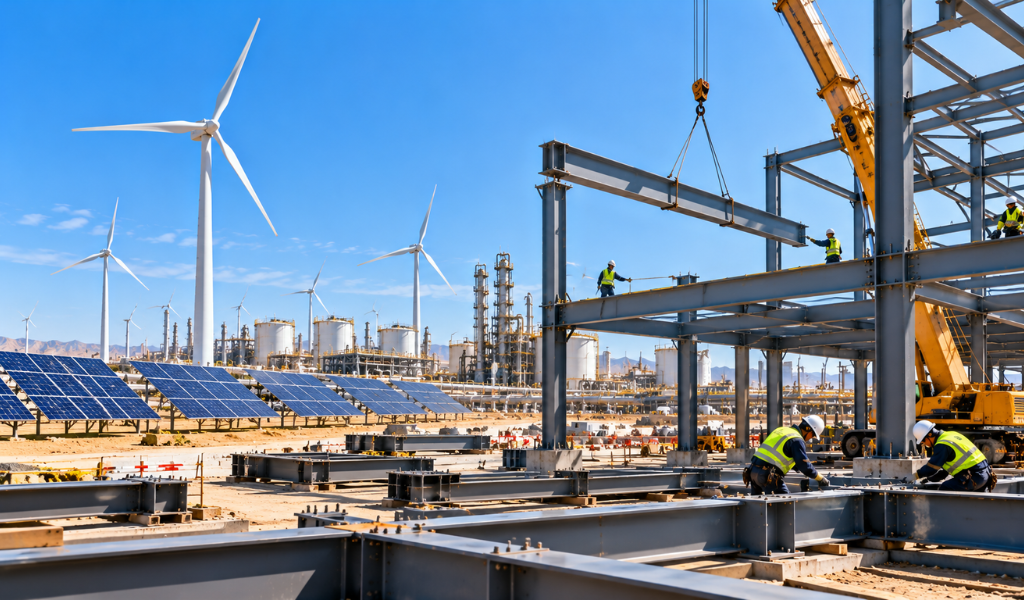
Some of the steel elements are prefabricated before being delivered to the construction site. This enables site preparation and component manufacturing to take place at the same time, allowing project teams to coordinate the various construction stages.
Prefabrication might reduce the field fabrication work and improve the efficiency of installation. However, actual time savings depend on design complexity, transport arrangements, site conditions, and project planning.
How Does Industrial Steel Construction Support Modern Infrastructure?
Industrial steel construction provides practical options for companies developing manufacturing facilities, energy infrastructure and commercial-industrial buildings.
Steel Structures for Industrial Buildings
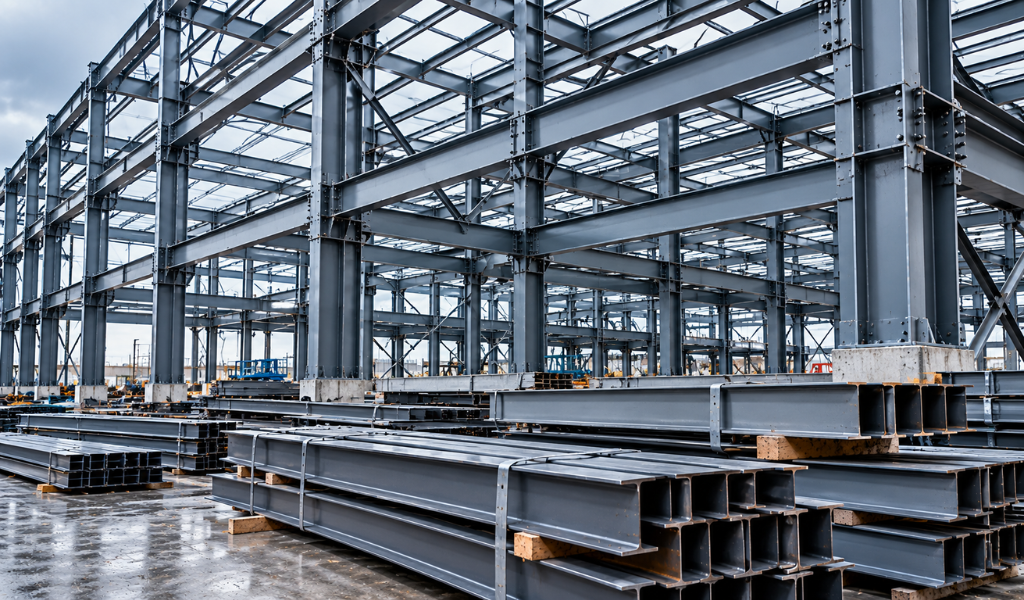
Factories, warehouses and processing plants typically need open internal spaces, access for equipment and flexible layouts to allow for future change. Carefully engineered beams, columns and roof systems can satisfy these requirements with steel frames.
Steel structures for industrial buildings may include:
-
Factory frames and warehouse structures.
-
Equipment support platforms and access walkways.
-
Roof trusses and structural supports.
-
Pipe racks and industrial service platforms.
-
Extensions and additional structural sections for existing facilities.
Each application requires correct engineering calculations, suitable materials, and compliance with relevant building and safety regulations.
Supporting Renewable Energy Development
Renewable energy installations depend on structural elements that can withstand environmental conditions while supporting operational equipment.
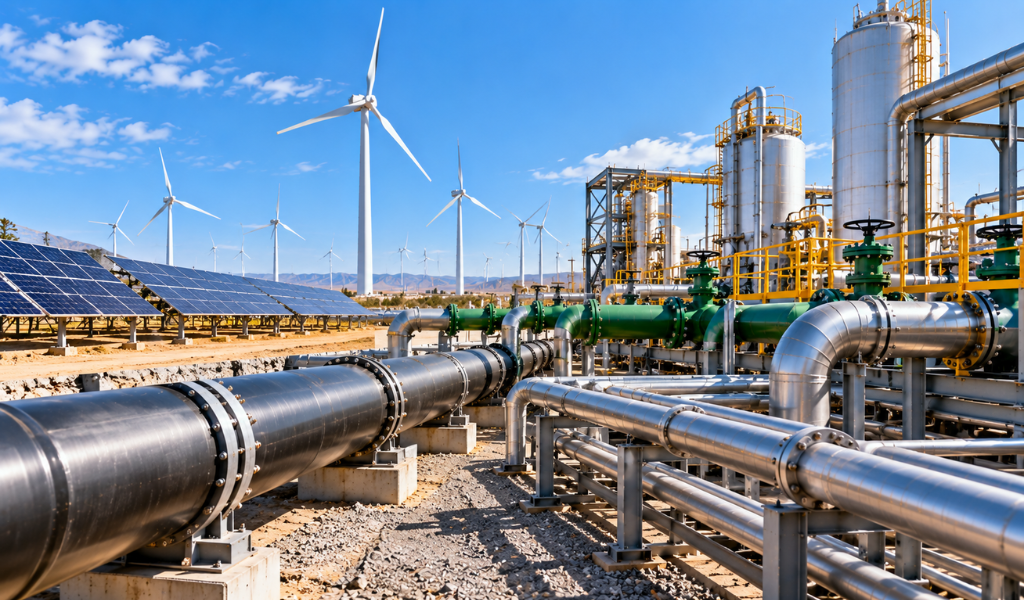
Solar mounting structures, wind energy infrastructure, maintenance access systems and equipment support frames can all utilise steel. The material choice is determined by the design, the anticipated loads, the environmental conditions and the required maintenance.
For projects in Saudi Arabia, material selection should be guided by the high temperatures, dust and potential corrosion. Proper protective coatings, detailing, and inspection programs can help to maintain performance over the service life of the structure.
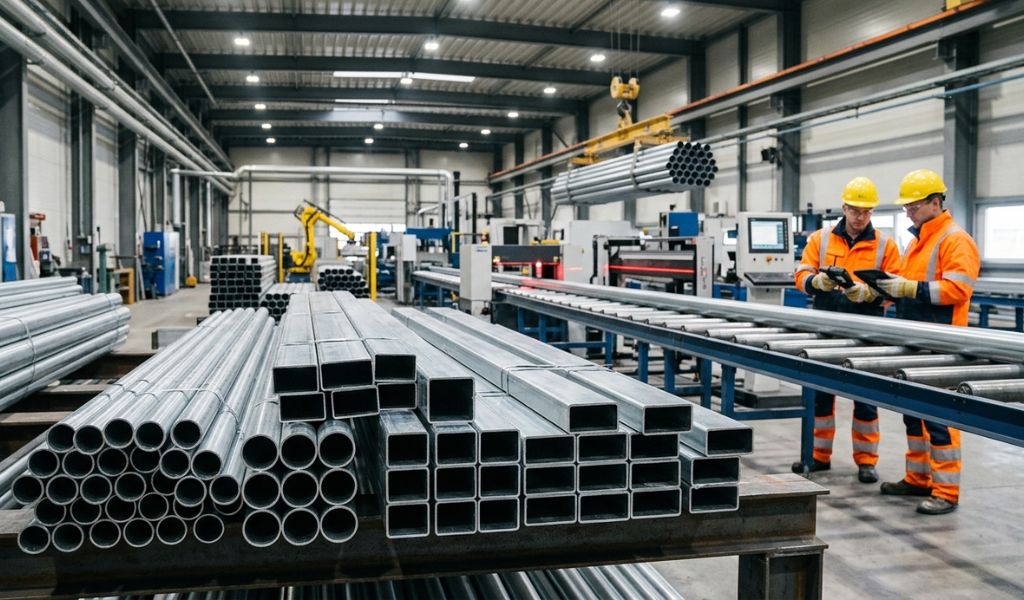
What Should Businesses Consider When Choosing Steel Construction Solutions in Saudi Arabia?
Choosing the right steel construction solutions in Saudi Arabia is more than just comparing material prices. Companies should assess the technical requirements, environmental exposure, fabrication capabilities, and the supplier’s ability to fulfill project specifications.
Check Material Quality and Specifications
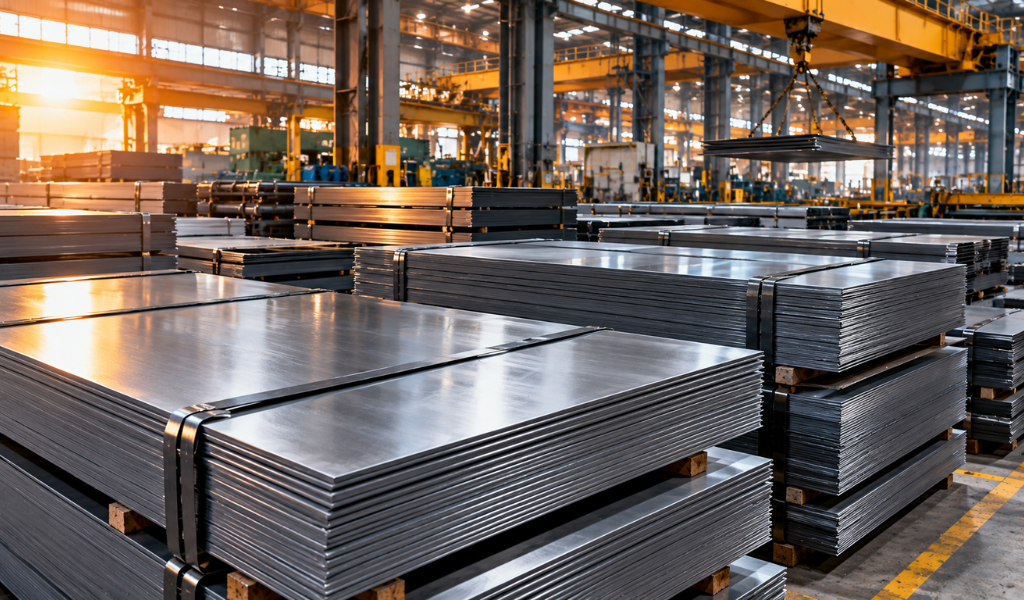
Check that the steel products meet the requirements of the grades, dimensions, applicable standards, and project documentation requirements. Traceability and quality checks are especially important for load-bearing components.
Consider Environmental Conditions
Steel in outdoor or industrial settings may need protective coatings or other corrosion-control methods. The right one is determined by humidity, airborne contaminants, chemical exposure, and maintenance access.
Evaluate Fabrication and Supply Capabilities
The right supplier should know the application and provide products matching the project drawings and specifications. Coordination between engineering, fabrication, delivery, and installation teams can reduce avoidable delays.
Mitwalli Steel Products Factory Co. supports steel-related project requirements through its product offering. Businesses can review the available products and assess their suitability against their technical specifications and project needs.
Practical Comparison: Which Steel Applications Suit Different Projects?
|
Project requirement |
Potential steel application |
Key consideration |
|
Solar energy installation |
Panel support frames and mounting structures |
Wind loads, exposure and corrosion protection |
|
Manufacturing facility |
Beams, columns and equipment platforms |
Load capacity and operational layout |
|
Warehouse development |
Structural frames and roof supports |
Clear spans, storage loads and future expansion |
|
Industrial processing site |
Pipe racks and access platforms |
Equipment loads, safety and environmental exposure |
|
Infrastructure expansion |
Additional frames and structural components |
Compatibility with existing structures and connections |
The final selection should be based on engineering calculations, project drawings, applicable standards, and site conditions rather than on material type alone.
Also read: Steel Construction Companies with Expertise in Commercial Buildings?
How Can Businesses Plan a Successful Steel Construction Project?
A clear procurement and construction plan can help businesses make informed decisions and manage project risks.
-
Define the application: Identify the structure's purpose, dimensions, expected loads and operating conditions.
-
Prepare technical specifications: Confirm steel grades, section sizes, connection details, and protection requirements.
-
Review the supplier's capabilities: Check product availability, quality documentation, and fabrication requirements.
-
Coordinate delivery and installation: Align manufacturing schedules, transport arrangements, and site readiness.
-
Plan inspections and maintenance: Establish appropriate checks for structural condition, protective coatings, and connections.
Early coordination between designers, contractors and steel suppliers can help identify potential issues before fabrication begins.
Conclusion
Steel constructions are still a valid option for renewable energy projects and industrial infrastructure because of their strength, design flexibility and potential for efficient fabrication. When specified and installed properly, steel can meet a wide range of structural needs – from solar support systems to factories, warehouses and equipment platforms.
For businesses exploring industrial developments, the right combination of structural steel products, environmental protection and engineering expertise can support long-term project performance. Reviewing available products from Mitwalli Steel Products Factory Co is a useful starting point for identifying options that align with your project's technical requirements.
FAQs on Steel Constructions
1. Why are steel constructions used in industrial projects?
Steel constructions provide strength, structural stability, and design flexibility. They are commonly used for factories, warehouses, equipment platforms, and other facilities that require engineered load-bearing structures.
2. How is steel used in renewable energy projects?
Steel can be used for solar panel mounting systems, equipment supports, maintenance platforms, and wind energy infrastructure. Its suitability depends on the project's structural and environmental requirements.
3. What are the main benefits of structural steel products?
Structural steel products offer high strength, fabrication flexibility, and compatibility with a wide range of building and industrial applications. They can also support prefabrication and coordinated installation.
4. Are steel structures suitable for industrial buildings in Saudi Arabia?
Yes, steel structures can be suitable for industrial buildings in Saudi Arabia when designed for local environmental conditions, expected loads, and applicable regulations. Corrosion protection and maintenance planning are also important.