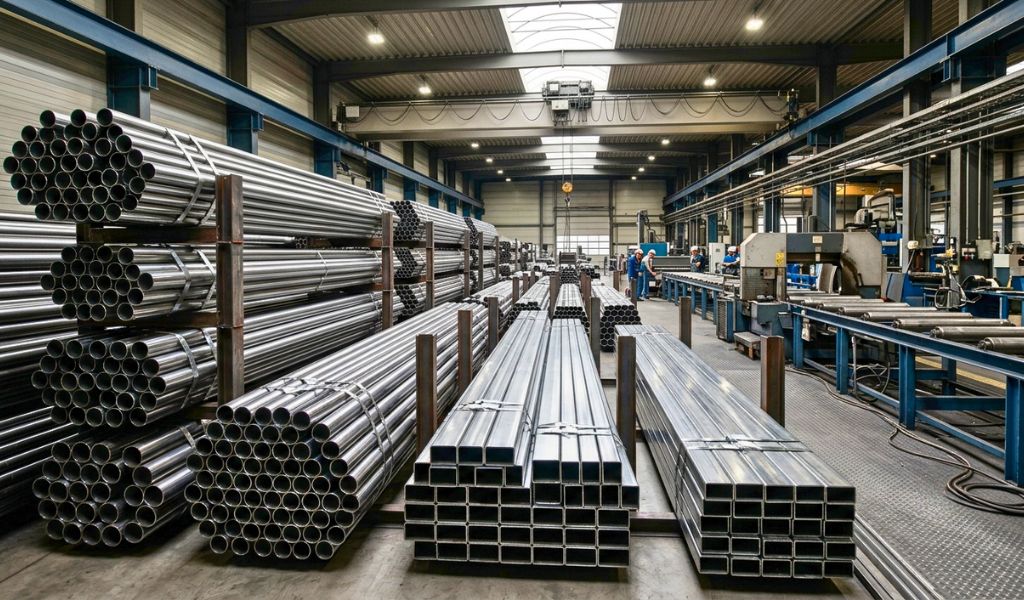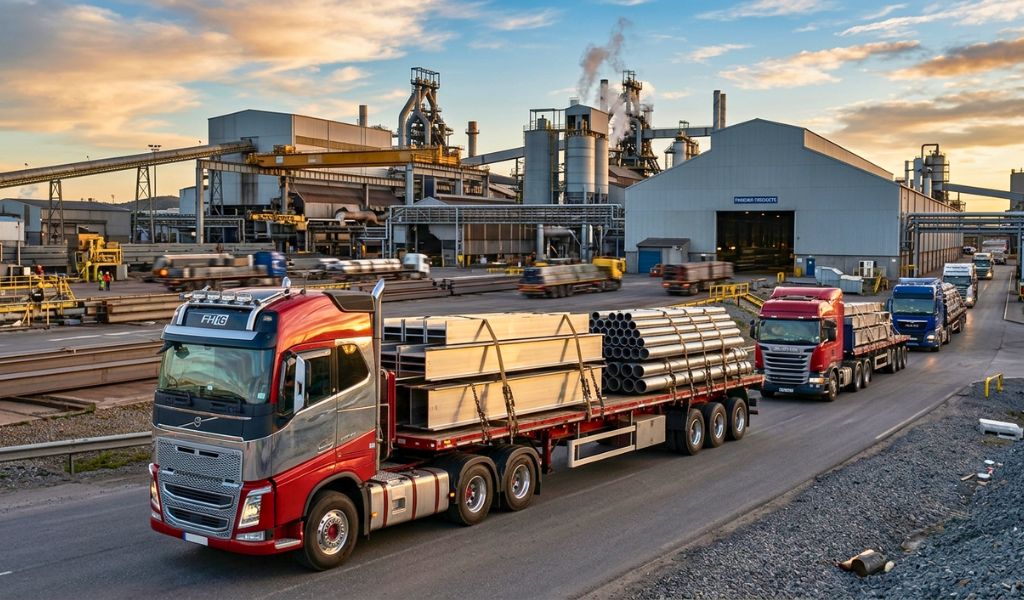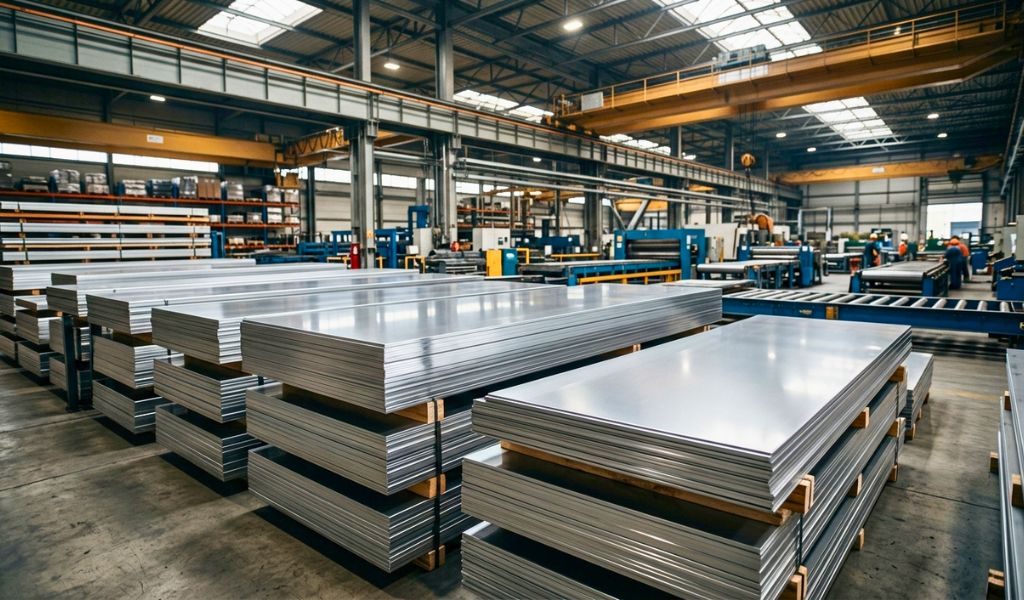
Construction projects throughout Saudi Arabia rely on strong and dependable materials that can withstand difficult working conditions. Steel sheets are important commercial items, owing to their strength, versatility, and manufacturing flexibility for structural and industrial applications. Whether it be for engineered components, machines, or manufacturing equipment, the proper grade and finish make all the difference in durability and performance.
Knowledge about what sheet types, thicknesses, finishes, and applications are enables project teams to make practical purchasing decisions that keep value in scope with a quality control and cost management approach.
Quick Summary
-
Steel sheets are utilized in construction, manufacturing, fabrication & industrial equipment.
-
Hot-rolled steel is ideal for strength and forming applications.
-
As cold-rolled steel, these product types have a smoother finish and more accurate dimensions.
-
Galvanised steel sheets offer enhanced protection against corrosion.
-
The ideal sheet depends on the application, thickness, environment, and required fabrication process.
What are steel sheets used for in manufacturing?
Steel sheets are flat steel products that are produced in various thicknesses and grades. In manufacturing, it can be cut, bent, welded, fabricated, or formed into the final parts.
Some typical uses consist of machinery parts, storage systems, tool housing, panels, enclosures, automotive components, and fabricated structures. Cold-formed manufacturing steels, in which uniform specifications and reproducible material characteristics are required, are especially useful.
In high-production environments that expect heavy usage, industrial steel sheets are more than sturdy & adaptable for high-end functionality.
Why are steel sheets important in industrial applications?
Steel sheets have the benefit of a fusion of strength, durability, and fabrication versatility, which makes them preferred in many industrial applications. They are designed for specific load conditions, surface treatments, and manufacturing processes.
Material performance is particularly critical in Saudi Arabia, where construction and industrial products often experience extreme temperatures, dust, and moisture. An appropriate grade and protective finish can also extend service life and minimize maintenance.
Which type of steel sheet is best for manufacturing?
Not a single best approach for every project. The type of material for any given part depends entirely on the strength wanted, appearance, if any, precision or tolerance, and the method of fabrication.
Hot-rolled steel sheets
A combination of the two steel sheets processed at higher temperatures is the hot-rolled steel sheet, which is more commonly used for structural and heavy-duty applications. Provides a good compromise where strength, formability, and cost are more important than a completely smooth surface finish.
Cold-rolled steel sheets
Cold-rolled steel sheets are those subjected to some processing for better dimensional tolerance and surface finish. They are commonly used for parts with a need for a cleaner look, tighter tolerances, or accurate forming aspects.
Galvanised steel sheets
Galvanised steel sheets consist of a layer of zinc, which provides some protection to the steel beneath. They can, therefore, be a realistic alternative for applications with environmental conditions where more corrosion protection is needed or trying to avoid moisture exposure.
What is the difference between hot-rolled and cold-rolled steel sheets?
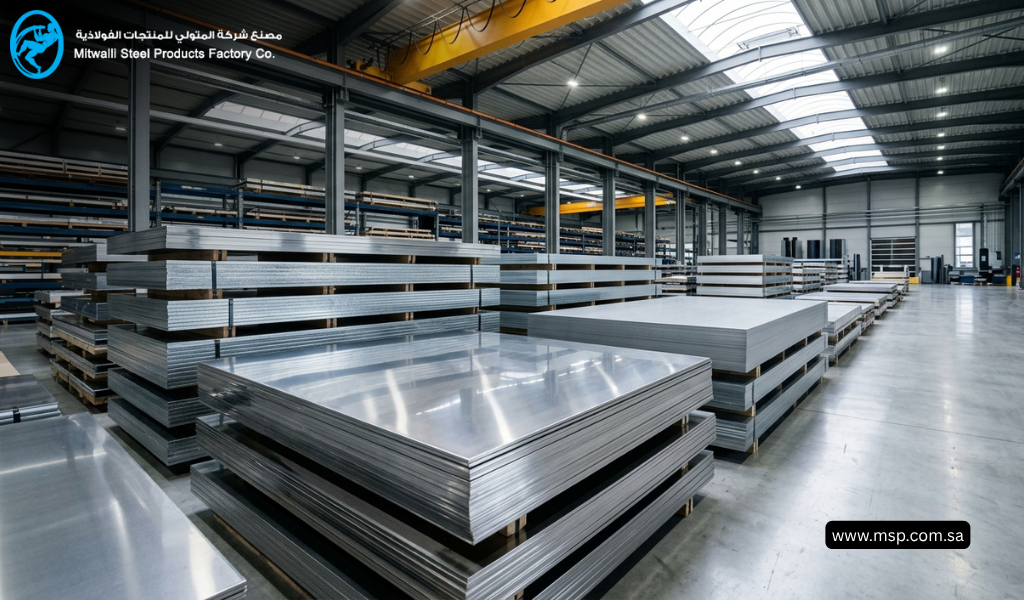
It is processed differently from how the steel is processed in either of the primers. Hot rolling occurs at high temperatures, allowing the material to yield more easily, and is ideal for heavy-duty purposes. Cold rolling is performed at lower temperatures and processed further for tighter tolerances and a smoother surface.
|
Feature |
Hot Rolled Steel Sheets |
Cold Rolled Steel Sheets |
Galvanised Steel Sheets |
|
Surface finish |
Relatively rough |
Smooth and refined |
Zinc-coated |
|
Dimensional accuracy |
Good |
Higher |
Good |
|
Typical use |
Structural and heavy fabrication |
Precision components |
Corrosion-prone applications |
|
Key advantage |
Strength and versatility |
Finish and accuracy |
Corrosion protection |
|
Suitable for |
Heavy-duty projects |
Detailed fabrication |
Indoor/outdoor industrial use |
Are galvanised steel sheets suitable for industrial use?
Yes. Galvanised steel sheets can be suitable for many industrial applications where corrosion resistance is important. Zinc coating acts as a shield to protect the steel panels, vapour ducts, roof components, enclosures, and other fabricated products.
The coating and sheet specification should be matched to the operating environment and anticipated service conditions.
Also read:- What Are the Common Types of Steel Sheets Used in Construction?
How do I choose the right steel sheet for my project?
Start with the application rather than the price alone. Consider the required load-bearing capacity, sheet thickness, dimensions, fabrication method, and environmental exposure.
Then, decide if the project will need a conventional, smooth, or resistant to corrosion finish. Before placing an order, it is also necessary to confirm which specifications, tolerances, and quality requirements will be applicable.
This process can be eased with a trained supplier. Businesses can refer to Mitwalli Steel Products Factory Co for estimating effective sheet products in terms of project and application needs.
A practical selection checklist
-
Define the intended application.
-
Define the type of thickness & the size needed.
-
Assess strength and formability requirements.
-
Think about exposure to moisture and corrosion.
-
Choose the appropriate surface finish.
-
Validate existing technical specs and quality thresholds.
-
Talk to a good steel supplier regarding your project needs.
Conclusion
The best steel sheets for the construction project depend on the strength, thickness, finish, fabrication, and environmental requirements of the application. Steel sheets can be hot-rolled for heavy-duty work, cold-rolled to avoid surface imperfections and obtain better finishing, or galvanised to protect the surface from corrosion.
Investing the time to align the stock with a project's needs can yield benefits in terms of performance, durability, and overall value. Discuss your realisation project with Mitwalli Steel Products Factory Co for robust sheet solutions and application advice.
FAQs on Steel Sheets
1. Which steel sheet is best for construction?
Hot-rolled steel sheets are commonly suitable for heavy-duty construction applications, but the correct grade and thickness depend on the project's structural and fabrication requirements.
2. Are cold-rolled steel sheets stronger than hot-rolled sheets?
Cold rolling mainly improves dimensional accuracy and surface finish. Strength depends on the specific steel grade and processing rather than the rolling method alone.
3. Are galvanised steel sheets good for outdoor construction?
Yes, galvanised steel sheets can be suitable for outdoor applications because their zinc coating helps protect the steel against corrosion.
4. What thickness of steel sheet should I use?
The required thickness depends on factors such as structural load, fabrication method, dimensions, and application. Technical project specifications should guide the final choice.