Steel pipes and steel tubes are two different materials that most of the buyers purchasing for industrial, construction, or manufacturing projects tend to mix-up. They may appear the same, but they have separate purposes and are created to different standards.
Know the difference so that you can purchase wisely, maximize project performance, and mitigate long-term costs. If there will be some changes like an erw pipe, ss pipe as well as a steel to a metal, knowing which product makes sense for the application is crucial.
Businesses like Mitwalli Steel Products Factory Co offer full circle steel options tailored to both commercial and industrial needs.
Summary
-
Steel pipes are primarily used for transporting liquids and gases.
-
Steel tubes are commonly used in structural and mechanical applications.
-
Dimensions for pipes are based on internal diameter, while tubes use outside diameter and wall thickness.
-
Corrosion-resistant steel pipes offer excellent durability in demanding environments.
-
Choosing a reliable supplier ensures consistent quality and long-term performance.
What is the Difference Between Seamless Steel Pipes and Welded pipes?
One of the most common questions buyers ask is about seamless versus welded steel pipes.
Seamless Steel Pipes
Seamless pipes are manufactured without a welded seam. They offer:
-
Higher pressure resistance
-
Better structural strength
-
Improved performance in critical applications
-
Consistent wall thickness
These pipes are widely used in oil, gas, petrochemical, and high-temperature environments.
Welded Steel Pipes
Welded pipes are produced by rolling steel and joining the edges through welding. An erw pipe (Electric Resistance Welded Pipe) is one of the most popular types.
Benefits include:
-
Lower production costs
-
Excellent dimensional accuracy
-
Suitable for general industrial applications
-
Faster availability
For many standard applications, ERW pipes provide a cost-effective and reliable solution.
How Do I Choose a Reliable Steel Pipes Company?
Choosing the right supplier is just as important as selecting the right product.
Here are a few factors to consider:
Product Quality
Look for manufacturers that comply with international standards and provide material certifications.
Industry Experience
Established companies often have stronger quality control systems and technical expertise.
Product Range
A trusted supplier should offer various products, including stainless steel pipe, ss pipe, ERW pipes, and specialized industrial solutions.
Customer Support
Responsive technical assistance can help you select the right product for your application.
Companies such as Mitwalli Steel Products Factory Co focus on delivering quality steel products backed by industry experience and customer-focused service.
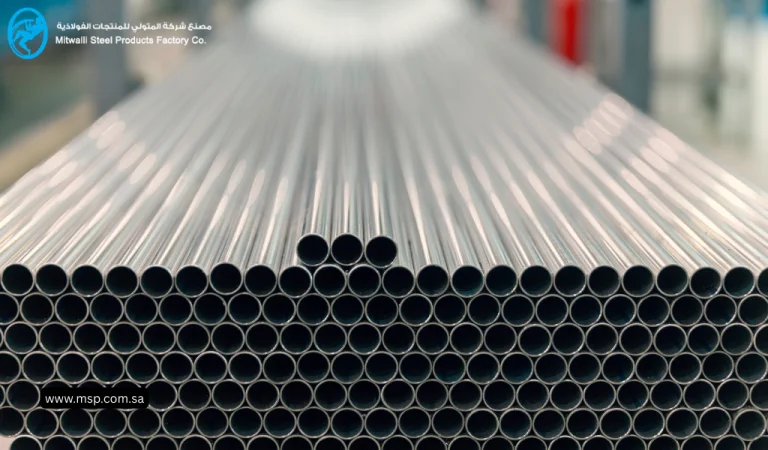
Which Steel Pipes Are Best for Industrial Applications?
The ideal pipe depends on the operating environment and project requirements.
Oil and Gas Industry
Seamless steel pipes are typically preferred because of their high-pressure capabilities.
Chemical Processing Plants
A stainless steel pipe offers superior corrosion resistance and long service life.
Water Distribution Systems
ERW pipes are commonly used due to their affordability and reliability.
Marine and Coastal Applications
Corrosion-resistant steel pipes provide excellent protection against moisture, salt exposure, and aggressive environments.
For industrial facilities requiring both strength and durability, high-quality products from Mitwalli Steel Products Factory Co can provide dependable long-term performance.
Practical Information Table
|
Application |
Recommended Pipe Type |
Key Benefit |
|
Oil & Gas |
Seamless Steel Pipe |
High-pressure performance |
|
Water Systems |
ERW Pipe |
Cost-effective and reliable |
|
Chemical Plants |
Stainless Steel Pipe |
Corrosion resistance |
|
Marine Projects |
Corrosion-Resistant Steel Pipes |
Long service life |
|
Construction |
SS Pipe |
Strength and durability |
|
Manufacturing |
Steel Tubes |
Structural precision |
Also read:- Steel Pipes: Key Factors to Consider for Optimal Performance and Longevity
How Long Do Steel Pipes Last in Harsh Environments?
Steel pipes lifetime is influenced by the pipe material, environmental conditions, maintenance practices and type of surface coatings used.
Generally:
-
Carbon steel pipes may last 20–50 years with proper maintenance.
-
Stainless steel pipe products can exceed 50 years in many applications.
-
Corrosion-resistant steel pipes often provide extended service life in marine, chemical, and industrial environments.
-
Protective coatings and regular inspections can significantly increase durability.
The best way to really extend life is by picking the right material for your environment.
Conclusion
Grasping the differences between steel pipes and steel tubes prepares buyers to implement the best solution for their applications. Pipes are generally made for the transportation of fluids and gases, tubes then again are more mechanical and structural.
Whether you are looking for an erw pipe, ss pipe, stainless steel pipe or distinct corrosion resistant steel pipes working with a reliable supplier can make all the difference between long-term value and performance. So, if you are looking forward to the next project, call up a factory like Mitwalli Steel Products Factory Co, an experienced manufacturer will assure quality, reliability as well as have an expert’s backup.
FAQs on Steel Pipes
1. What are steel pipes mainly used for?
Steel pipes are primarily used for transporting liquids, gases, steam, and other materials in industrial and commercial systems.
2. Is an ERW pipe suitable for industrial applications?
Yes. An erw pipe is widely used in water distribution, construction, manufacturing, and general industrial applications due to its affordability and reliability.
3. Why choose a stainless steel pipe over carbon steel?
A stainless steel pipe offers better corrosion resistance, longer service life, and lower maintenance requirements in harsh environments.
4. Which steel pipes last the longest?
Corrosion-resistant steel pipes and stainless steel pipes generally provide the longest lifespan, especially in chemical, marine, and high-moisture environments.