Selecting the right steel pipes is crucial if you want to create reliable plumbing systems that will provide long-lasting efficiency. Regardless of whether your framework encompasses a private structure, business property, or modern office, picking the correct pipe material can limit support costs and improve water flow while expanding solidity. By understanding the difference between an ERW pipe, SS Pipe, stainless steel pipes, and corrosion-resistant steel pipes, you can make sure that your decision is right for your project.
Quick Summary
-
Steel pipes have low flow resistance, high mechanical strength, and longevity.
-
Various applications call for different pipe types and materials.
-
They each offer different benefits, with seamless pipes uniting the concrete strength and diamond shape.
-
Plumbing and industrial environments require corrosion resistance.
-
Selecting a reputable Saudi manufacturer guarantees uniform quality and assistance.
What are steel pipes used for in construction and industrial projects?
The reason steel pipes have a prominent application is that they have strength, durability, and flexibility. They are used to transport water, gas, chemicals, and other fluids, as well as to provide support for construction projects.
Common applications include:
-
Residential and commercial plumbing systems
-
Fire protection systems
-
Industrial processing plants
-
Oil and gas infrastructure
-
HVAC installations
-
Structural frameworks and utility networks
You find that an ERW pipe is generally the choice for water distribution and plain plumbing owing to its uniformity in dimensions as well as being easier on the pocket. Stainless steel pipe and other corrosion-resistant steels are used in projects that are exposed to moisture or chemicals, providing many years of protection.
What is the difference between seamless and welded steel pipes?
Selecting between seamless and welded pipes depends on your project's operating conditions.
Seamless Steel Pipes
Seamless pipes are produced without a welded joint furnace-forming and are more suitable for high pressure & temperature. The excellent strength provided by carbon steels makes them widely used in heavy-duty industrial environments.
Welded Steel Pipes
Welded pipes are formed by taking steel and rolling it into a cylindrical shape, followed by welding the edges together. New manufacturing processes create strong, consistent welds for plumbing, construction, and general engineering applications.
Welded pipes offer high performance for most plumbing systems whilst still being a low-cost option.
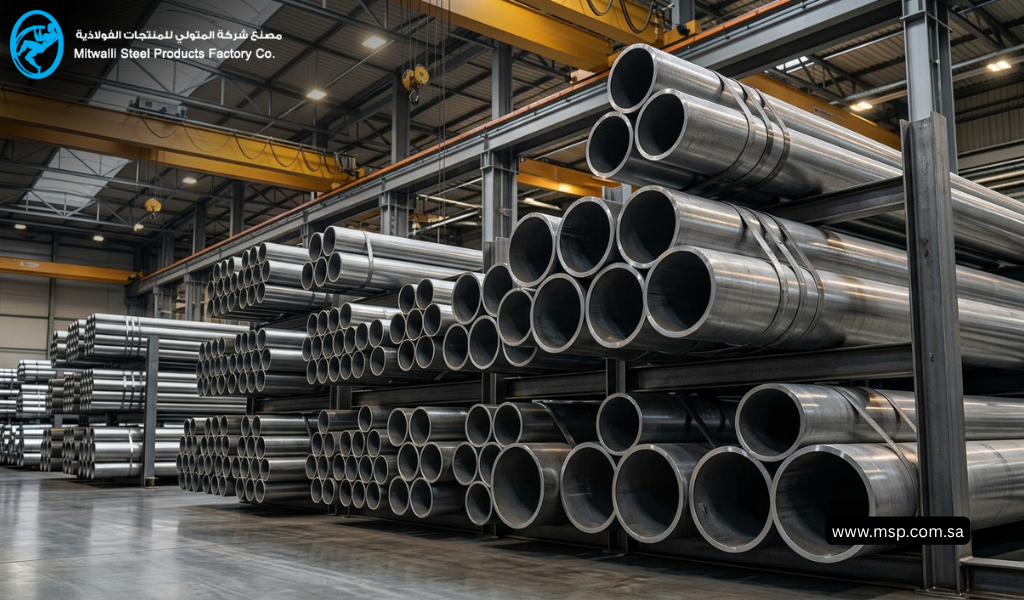
What are the benefits of stainless steel pipes?
There are many advantages of quality SS pipe that make it very popular for plumbing and industrial use.
-
Excellent corrosion resistance
-
Clean water friendly hygienic surface
-
High durability with minimal maintenance
-
Attractive appearance for exposed installations
-
Long operational lifespan
If the water quality is given particular importance, cleanliness and rust prevention requirements are met with a stainless steel pipe.
Practical Information Table
|
Application |
Recommended Pipe |
Key Benefit |
|
Residential plumbing |
ERW pipe |
Affordable and reliable |
|
Commercial buildings |
Stainless steel pipe |
Excellent corrosion resistance |
|
Chemical processing |
SS pipe |
Handles corrosive environments |
|
Outdoor installations |
Corrosion-resistant steel pipes |
Longer service life |
|
High-pressure systems |
Seamless steel pipe |
Superior strength |
How do you choose the right steel pipes for your application?
Selecting the right steel pipes involves considering several practical factors.
Identify the Application
Identify whether the pipes will be used to transport drinking water, chemicals, gas or industrial fluids.
Consider Corrosion Resistance
Corrosion-resistant steel pipes help in preventing premature deterioration when exposed to moisture, corrosive coastal climates, and chemicals.
Check Pressure Requirements
Some plumbing systems operate perfectly well with ERW pipe solutions, while higher operating pressures may call for seamless pipes.
Choose the Right Material
For hygienic plumbing systems, a stainless steel pipe or SS pipe provides durability, easy maintenance, and excellent corrosion protection.
Verify Quality Standards
Always opt for products that conform to the recognised international manufacturing and quality appraisal standards.
Also read:- Steel Pipes vs Steel Tubes: What Is the Difference?
How do you choose a reliable steel pipe manufacturer in Saudi Arabia?
A reliable vendor is critical to making certain things function and perform right.
Look for manufacturers that offer:
-
Certified manufacturing processes
-
Wide product range
-
Consistent product quality
-
Technical expertise
-
Reliable delivery schedules
-
Strong customer support
To cater to the demand for various steel products in construction, infrastructure, and industrial sectors across Saudi Arabia, Mitwalli Steel Products Factory Co has carved a niche by providing quality products. A wide product line and quality assurance enable picking the right solutions for various applications.
When completing long-term projects, the approach allows for easier sourcing and reliable product performance when working with an experienced manufacturer.
Conclusion
Choosing steel pipes for general use needs a balance between durability, corrosion resistance, pressure requirements, and the uses of the application. From an inexpensive ERW pipe to a long-lasting SS pipe to high-end stainless steel pipes and specialised corrosion-resistant steel outlets as well, quality materials from reliable or reputed manufacturers help you enjoy durable results. Mitwalli Steel Products Factory Co helps you with top-notch steel products and expert support designed to meet the needs of modern plumbing or industrial projects.
FAQs on Steel Pipes
1. Which steel pipes are best for plumbing applications?
Stainless steel pipes are ideal for corrosion resistance, while ERW pipes are widely used for standard residential and commercial plumbing systems.
2. What is the difference between ERW pipe and seamless pipe?
ERW pipes are welded and suitable for general applications, whereas seamless pipes are manufactured without welds for higher-pressure environments.
3. Why are stainless steel pipes preferred for water systems?
They resist corrosion, maintain water quality, require little maintenance, and have a long service life.
4. How do I know which steel pipe size to choose?
Pipe size depends on the required flow rate, operating pressure, and the specific plumbing or industrial application.