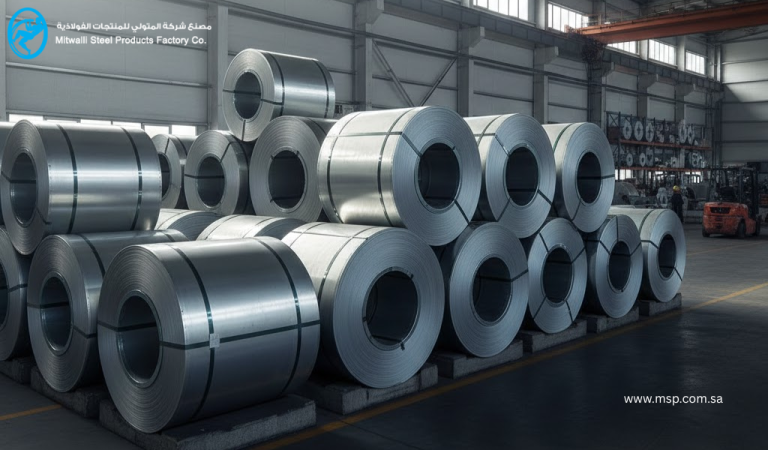
Understanding Steel Coils: Applications, Benefits, and Industry Insights
One of the major role of steel coils in the manufacture, construction, and the industrial sectors. Look at the frame of a skyscraper, the body of a car, or the steel inside the roof and each one of those products start the journey as a steel coil. Concrete products are-manufactured using concrete as base materials.A major driving factor for increasing supply of modern infrastructure as concrete products are versatile,customizable, cost-efficient and have high demand in number of industries.
This comprehensive guide digs into what steel coils are, how they make steel coils, differences in hot rolled steel coils, cold rolled steel coils, galvanized steel coils, and how they are used by industries for boosting performance, durability, and productivity.
This blog aims to aid buyers, engineers, and businesses alike to make wise decisions especially if you are looking for trustworthy steel suppliers or are assessing materials for your next project.
What Are Steel Coils?
Steel coils are long steel strips wound into a roll shape (coil shape). Manufacturers create steel sheets of specific thicknesses, widths, and grades through special rolling processes to produce these coils.
Steel coils find extensive applications across various industries due to their flexibility for fabrication and ease of transportation.
- Construction and structural engineering
- Automotive production
- Industrial equipment and machinery
- Electrical and HVAC industries
- Roofing and cladding
- Home appliances
- Pipelines and metal furniture
One of the most versatile steel products, steel coils can be slit, cut, bent, or stamped to form nearly any kind of shape.
How Steel Coils Are Made: A Practical, Easy-to-Understand Process?
This knowledge can also help buyers detect quality, perform, and functionality differences in steel coils and one product’s ability to meet a desired application. Although the process differs slightly for each type of coil that is being made, the overall steps will remain the same.
1. Melting the Raw Materials
The starting point for steel is huge furnaces that melt and refine scrap steel, iron ore, alloys, and flux materials. After the molten steel reaches the desired chemical composition, it is ready for casting.
2. Casting Into Slabs
Molten steel is subsequently cast into big slabs. Those slabs are the starting base of rolling processes.
3. Hot Rolling
The slabs are sent through rolling mills at very high temperatures to have their thickness reduced and transformed into long, flat sheets. These sheets at a hot condition are rolled into hot rolled steel coils.
4. Cold Rolling (Optional Second Stage)
In applications where precision and surface finish matters, the hot rolled steel is allowed to cool and then run through other rollers at room temperature to produce cold rolled steel coils.
5. Galvanizing (For Coated Steel)
A few coils go through a zinc covering — hot plunge or electro-galvanizing process creating coils of galvanized steel that remain rust and erosion free.
6. Finishing and Quality Testing
Coils are cut from coils and tested for several qualities such as thickness, coating weight, mechanical strength, and surface quality.
A defined process maintains proper mechanical performance, consistency, and longevity—all key to industries that use top-tier steel.
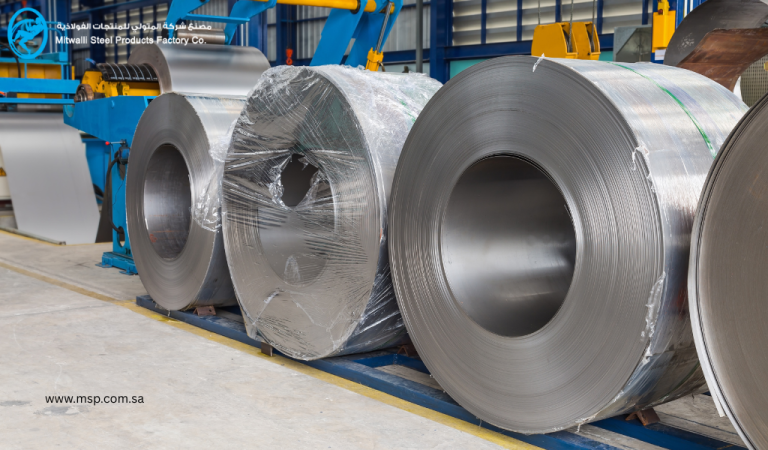
Types of Steel Coils and Their Industry Applications
Hot Rolled Steel Coils
The production of hot rolled steel coils is at very high temperatures which makes the steel easier to twist. Hot rolled coils may have a little bit rougher surface than cold rolled steel, but the strength and cost makes it great for structural applications.
Why Businesses Choose Hot Rolled Steel Coils?
- Excellent weldability and formability
- Less expensive than other arrangements of coils
- Suitable for thick sections
- Perfect for full scale structural and industrial application
Common Applications
- Structural beams and columns
- Construction frames
- Industrial machinery
- Truck chassis and trailers
- General fabrication and manufacturing
Hot rolled steel coils are often preferred by industries that need strength and cost efficiency.
Cold Rolled Steel Coils
Cold rolled steel coils are produced by taking hot rolled steel and running it through a second processing stage at room temperature. Cold rolled coils go through this step which improves• Surface finish• Hardness• Precision (High accuracy as compared to hot rolled coils.)
Advantages of Cold Rolled Steel Coils
- Smooth, clean, premium-quality finish
- High dimensional accuracy
- Enhanced Strength Based On Strain Hardening
- Perfect for bending, shaping, and light fabrication
Where Cold Rolled Steel Coils Are Used?
- Automotive body parts
- Steel furniture
- Home appliances
- Electrical panels and enclosures
- High-precision industrial components
In cases where a perfect finish and precise measurements are required, cold rolled steel coils would be the perfect solution.
Galvanized Steel Coils
Zinc coated steel coils are known as galvanised steel coils. Galvanised steel coils are steel coils with a coating of zinc to protect it from corrosion. This makes them especially helpful for use in applications where moisture, heat, or chemicals may be present.
Benefits of Galvanized Steel Coils
- Superior resistance to rust
- Long-lasting performance
- Lower long-term maintenance cost
- Ideal for outdoor applications
Typical Applications
- Roofing sheets and cladding
- HVAC ducts and ventilation systems
- Electrical appliances
- Agricultural structures
- Fencing and safety barriers
Galvanized coil is the industry leader for protection and value in outdoor, marine or humid environments.
Why Steel Coils Are Essential in Modern Manufacturing?
Businesses and large-scale industries get countless benefits out of steel coils. Over the last two decades, industrial modernization, and infrastructure development on a global scale, has steadily increased their popularity.
1. High Strength and Durability
The coils help deliver high mechanical strength which makes it ideal for applications that require withstanding high loads and harsh conditions.
2. Cost Efficiency
They are created in coils which can be processed continuously which reduces fabrication time, minimizes scrap, and allows for high-volume production.
3. Flexibility in Fabrication
They can be customized to any shape—cut, slit, stamped, rolled, etc., based on the application.
4. Availability in Multiple Grades
Coils are made from low to high grade mild steel products to cater construction, industrial, automotive or commercial needs.
5. Suitable for Large-Scale Projects
Of course, steel coils have a reliable standard of quality and consistency, whether you are putting up warehouses, factories, transport systems, or consumer goods.
The steel coil is one of the most strategic materials that industries keep investing on in the world, who is looking forward to further upcoming news and durability of long-term projects.
Also read: Hot-Rolled Vs Pre-Painted Steel Coils: Which Suits Saudi Roofs Best?
Industry Insights: The Rising Demand for Steel Coils
Steel coils are in high demand worldwide, particularly in markets that are concentrated on building infrastructure, industrial growth, and modernization. This has multiple trends driving it up:
1. Infrastructure Mega-Projects
Steel coils, used for structural systems, roofing, cladding, and heavy fabrication, are incredibly important as countries are currently going through large-scale construction and industrial development.
2. Automotive Innovation
Steel coils—particularly of cold rolled and galvanized types—will continue to play a critical role, as automotive manufacturers continue to seek lower weight but durable materials.
3. Global Shift Toward Sustainable Steel Products
With manufacturers embracing cleaner processes and energy efficient technologies, the need of the hour for sustainability targets becomes focusing on how steel coils are produced.
4. Increased Use of Coated Steel
This is expected to surge the adoption of galvanized & coated steel coils as they help the industries to reduce long-term maintenance costs.
5. Custom-Grade Steel Requirements
With steel now needed at specific thicknesses, strengths, and coatings, coils are the most economical and versatile option for many industries.
How to Choose the Right Type of Steel Coil for Your Project?
Choosing the right type of steel coil can have a major impact on cost-effectiveness, longevity, and function of a project. So what can businesses do to choose wisely?
1. Consider Your Application
- Application→Structural use → Hot rolled steel coils
- Applications for the Precision items → Cold-rolled steel coils
- Non-magnetic or humid environments → Galvanized Steel Coils
2. Evaluate Strength and Durability Needs
Mechanical Properties: The tensile strength, yield strength, and coating thickness of the coil must be examined.
3. Check Surface Finish Requirements
Things like appliances or accent pieces require a smoother surface.
4. Choose a Reliable and Certified Supplier
Work with manufacturers who offer:
- Consistent quality
- Certified material test reports (MTC)
- On-time delivery
- Technical assistance
- Custom sizing and services
The right supplier keeps your product quality on point, reduces returns, and ensures efficient operations.
Conclusion
Steel Coils however are still considered one of the most essential materials in construction, automotive manufacturing, industrial engineering and consumer goods production. Due to their balance of strength, adaptability and versatility, they are important to businesses seeking high quality, cost prudence, and long-term dependability. Technology will continue to develop at an ever-faster pace, and with advances in how steel coils are produced — including improved rolling processes, advanced coatings, and stronger alloys — the performance of this versatile material will only increase for use in a wider variety of applications.
So, based on your project requirement whether the hot rolled steel coils, cold rolled steel coils or galvanized steel coils depending on your offer you choosen. Using the right steel type will guarantee long-lasting result, structural integrity and cost effective as well. A partnering arrangement with reliable steel supplier can also provide businesses with the means to obtain high performance materials that will contribute to the organizational growth and create lasting value.
Frequently Asked Questions on Steel Coils
1. What are steel coils mainly used for?
Steel coils are widely used in construction, automotive manufacturing, industrial machinery, roofing sheets, cladding panels, and home appliances. Their ease of fabrication makes them ideal for a wide range of applications.
2. What is the difference between hot rolled and cold rolled steel coils?
Hot rolled steel coils are processed at high temperatures and are ideal for structural and heavy-duty applications. Cold rolled steel coils undergo additional processing at room temperature, giving them better surface finish and dimensional accuracy.
3. Why should I choose galvanized steel coils?
Galvanized steel coils offer protection against rust and corrosion due to their zinc coating. They are perfect for outdoor, coastal, or moisture-prone environments.
4. How are steel coils made?
Steel coils are produced by melting raw materials, casting the steel into slabs, hot rolling them, and—if required—cold rolling or galvanizing the material. The final product is tested and wound into coil form.
5. How do I know which steel coil is right for my project?
Choose based on your application needs: structural strength, surface finish, corrosion resistance, or precision. Consulting a trusted steel supplier can help ensure the right selection.
Add New Comment
Sorry, Comments are closed!