Steel coils are one of the essential raw materials for modern manufacturing, construction, automotive production, and pipe fabrication. But wide coils do not fit well on some production lines. This is where professional slitting services come into play: turning large coils into uniform strips and providing a clean edge along the cut surfaces.
Technical competence, material quality, dimensional accuracy, quality assurance, and support in delivery should be looked into by businesses that want a reliable coil processing service in Saudi Arabia. Mitwalli Steel Products Factory Co offers precision coil slitting, producing wide custom skelp for induction welding, studs for welded pipes, Structural tubes, and industrial fabrication.
Quick Summary
-
In construction, automotive, oil and gas, appliances, and pipe manufacturing, these coils made of steel are widely used.
-
Steel coils may either be of the hot rolled, cold rolled galvanised and pre-painted steel coils.
-
Steel coil slitting converts wide coils into narrower strips or skelps for specific manufacturing requirements.
-
Selection of the right coil based on thickness, width, grade, surface finish, and application and processing requirements.
-
An experienced supplier should provide proper processing, inspections, quality control, traceability, and delivery reliability.
What are steel coils used for?
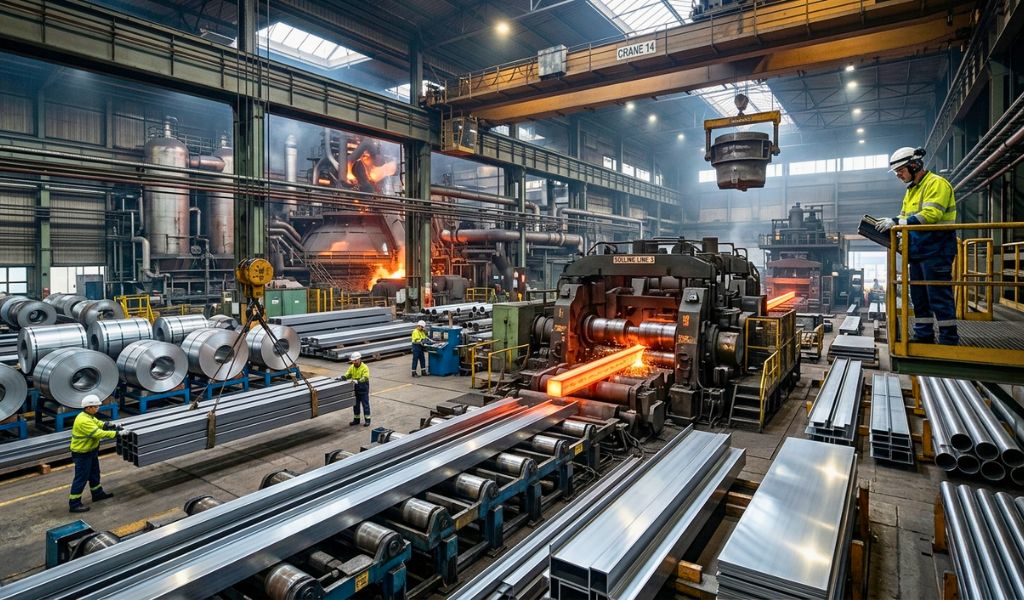
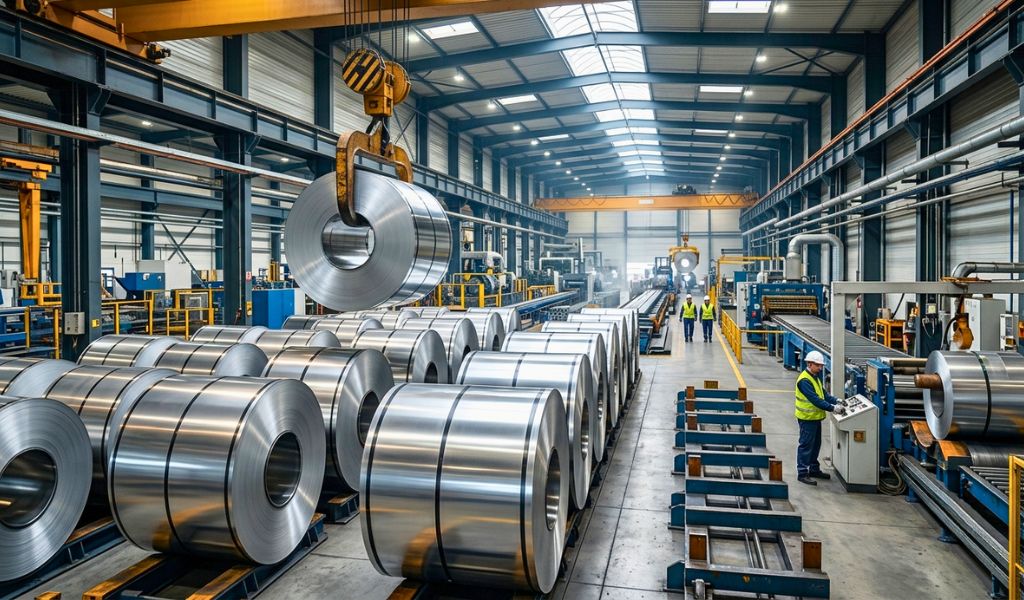
Steel coils are made by rolling the steel into long, continuous sheets and winding them up in tightly packed coils. They can be easily transported, stored, and processed because of their relatively flexible format.
Typical steel coil applications include:
-
Welded pipes and tubes
-
Roofing and wall panels
-
Automotive body and structural components
-
Steel cabinets and machinery housings
-
Construction support structures
-
Oil and gas pipe manufacturing
Slit coils, also known as skelps in certain pipe-making applications, can be particularly useful where manufacturers need narrow, consistent strips for longitudinally welded pipes.
What Makes Steel Coils Essential to Modern Industry?
This makes the steel coils an effective starting option for many forms of mechanical usage. Rather than creating separate sheets or strips for each and every application, manufacturers can treat coils based on their demands of production.
For the industry, this can improve material use, regular dimensions, and simplification of further downstream processing. This is especially important for precision processing applications when coils will be shaped, welded, or installed into automated production systems.
Why does processing accuracy matter?
Similarly, slight variations in width, thickness, or edge condition can impact forming and welding performance. As such, professional coil processing allows manufacturers to control their production outcomes more reliably.
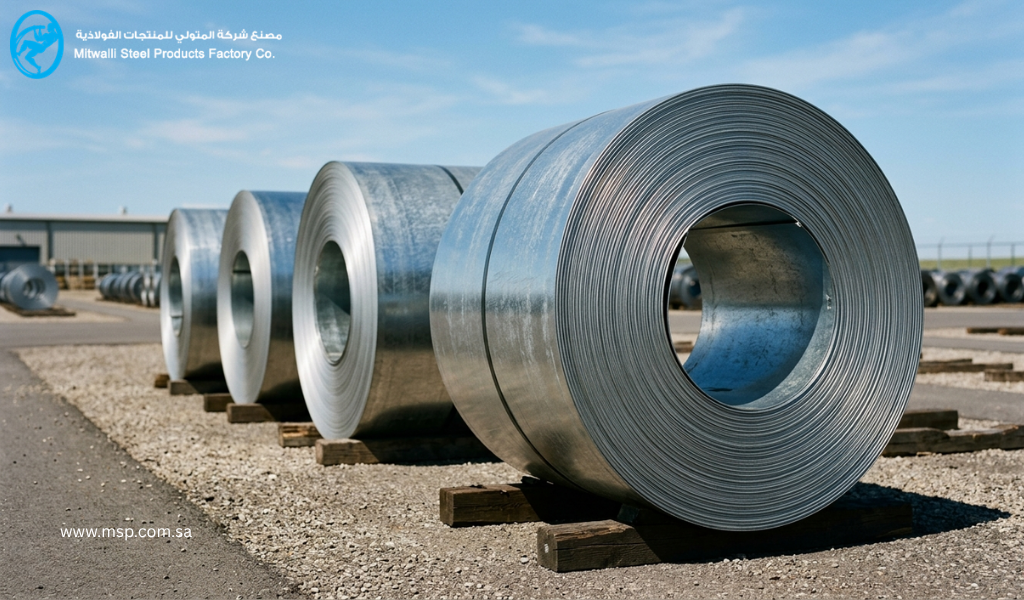
What are the different types of steel coils?
Different projects require different material characteristics. Understanding the main types of steel coils can make procurement decisions easier.
|
Coil Type |
Key Characteristics |
Common Applications |
|
Hot Rolled Steel Coils |
Produced at high temperatures; suitable for many structural applications |
Pipes, fabrication, construction |
|
Cold Rolled Steel Coils |
Better surface finish and dimensional precision |
Automotive, appliances, precision fabrication |
|
Galvanised Coils |
Zinc coating provides improved corrosion resistance |
Roofing, panels, construction |
|
Pre-Painted Coils |
Factory-applied coating and colour finish |
Roofing, cladding, architectural products |
Hot-rolled steel coils are often preferred for demanding structural and fabrication applications, while cold-rolled steel coils can be suitable where surface quality and dimensional accuracy are particularly important.
How does steel coil slitting work?
Steel coil slitting is the process of passing a wide coil through a specialized slitting line with rotary knives to produce several narrow strip sub-coils. The knives then cut the material into narrower strips, followed by the dimensions that you need.
A typical process involves:
-
Material inspection - Identify coil thickness, surface condition, and weight
-
Machine Configuration – Slitting tools are prepared for the required strip widths.
-
Slitting – Using rotary knives, the broad coil is subdivided to make much thinner strips.
-
Recoiling – The strips are rewound under controlled tension.
-
Quality inspection – Dimensions, edges, and material specifications are verified.
-
Packaging and shipment – Coils are labeled and readied for delivery.
Mitwalli Steel Products Factory Co, coil slitting services including potential hot-rolled, cold-rolled, galvanised and pre-painted coils with additional processing requirements and specific requests of varying widths.
Also read:- How to Choose the Best Steel Coils for Construction Projects in Saudi Arabia?
How do I choose the right steel coil for my project?
Don't just take the cost of the coil price, approach it from the requirements of the finished product. Consider the following:
-
Material grade: Ensure the steel material conforms to the relevant technical specification.
-
Achievements: Match the coil thickness to the specifications of forming, welding, and structural criteria.
-
Width: Choose between an Original coil and a slit width.
-
End use: The material required for the manufacturing of pipes, automotive components, and construction products may differ.
-
Quality documentation: Mill Test Certificates and material traceability can be important for industrial projects.
-
Supplier capability: Check whether the processor can consistently meet your width, edge, and tolerance requirements.
A well-equipped supplier with effective quality-control systems can also avoid needless waste and rework.
Conclusion
Steel coils are one of the most important metal alloys for several industrial applications, but value arises only if the material received conforms to the production process requirements. Be it hot-rolled steel coils or cold-rolled steel coils, familiarity with dimensions and provenance could result in a far more favorable manufacturing result.
For businesses requiring precise steel coil slitting in Saudi Arabia, working with an experienced processor can simplify material preparation and improve consistency. Mitwalli Steel Products Factory Co offers customised coil slitting and skelp manufacturing for a range of industrial applications. Contact the team to discuss your required coil specifications, widths, and processing needs.
FAQs about Steel Coils
1. What are steel coils mainly used for?
Steel coils are used for manufacturing pipes, tubes, automotive components, roofing systems, wall panels, machinery housings, and structural products.
2. What is steel coil slitting?
Steel coil slitting is a process that cuts wide steel coils into narrower strips using precision rotary knives. These strips can then be used for manufacturing and fabrication.
3. What is the difference between hot-rolled and cold-rolled steel coils?
Hot-rolled steel coils are processed at high temperatures and are commonly used for structural and fabrication applications. Cold-rolled steel coils generally offer improved surface finish and dimensional precision.
4. How do I choose the right steel coil for my application?
Consider the required steel grade, thickness, width, surface finish, coating, end use, and relevant quality standards before ordering.