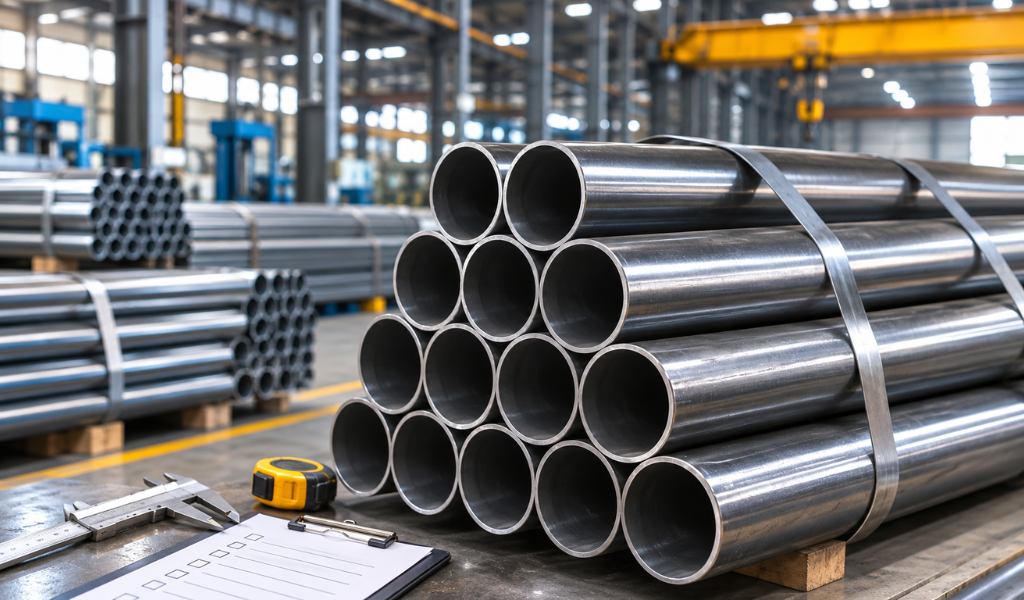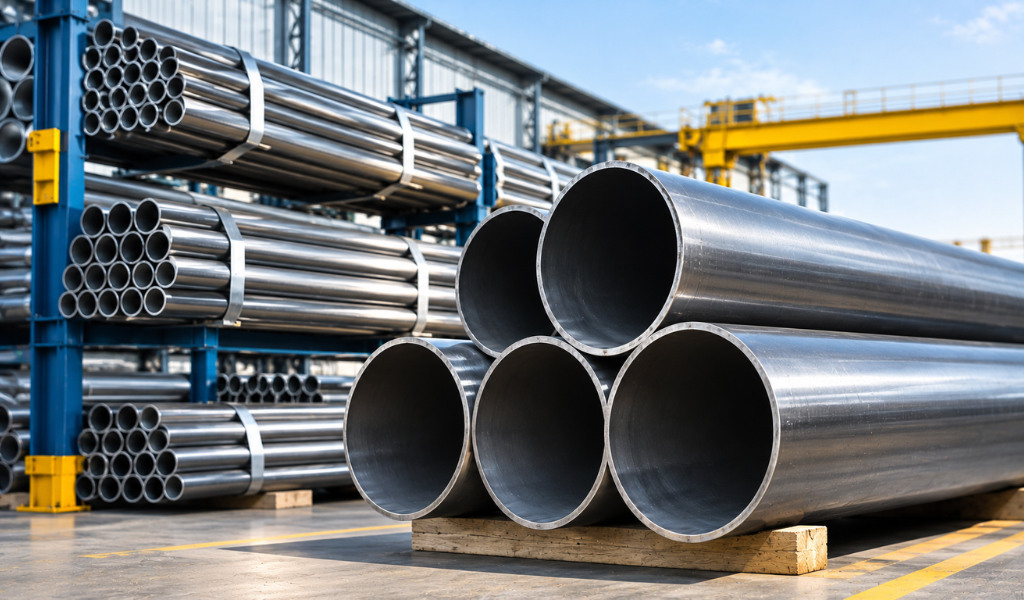
Choosing the right steel pipes is a key decision for any industrial or construction project. Proper pipe size provides structural stability, efficient performance, and long-term durability. But if you choose the wrong diameter or wall thickness, you might find it difficult to install, pay more than you need to, and even create a safety hazard.
Whether it is construction, manufacturing plants, infrastructure, or industrial plants, you need steel pipes. You need to know the pipe dimensions and the project requirements. Several factors influence the right choice, from load-bearing capacity to environmental conditions.
This guide explains how to select the appropriate steel pipe size and what to consider before making a purchase.
Quick Summary
-
Consider the project's purpose before selecting a steel pipe size.
-
Evaluate pipe diameter, wall thickness, and overall length.
-
Choose materials according to load requirements and environmental conditions.
-
Compare different types of hollow steel pipes based on their intended applications.
-
Work with a reliable steel supplier to ensure consistent quality and specifications.
Why Is Choosing the Right Steel Pipe Size Important?
Pipe dimensions directly affect the performance, safety, and cost of an industrial project. A pipe that is too small may not provide sufficient strength or capacity, while an oversized option can increase material and installation costs.
Selecting appropriate industrial steel pipes offers several advantages:
-
Structural strength: Provides the required support for construction and engineering applications.
-
Better performance: Helps meet project-specific operational requirements.
-
Cost efficiency: Reduces unnecessary material consumption and replacement expenses.
-
Easy installation: Ensures compatibility with existing structures and connections.
-
Long-term reliability: Supports durability under expected working conditions.
Key Factors to Consider When Selecting Steel Pipes
Before ordering steel pipes, assess the following technical requirements.
1. Determine the Application
Start by identifying how the pipes will be used. Different steel pipe applications require different dimensions and specifications.
For example, pipes used in structural frameworks may need greater load-bearing capacity, while those used in industrial systems may require specific internal diameters and pressure ratings.
Clearly defining the application helps narrow down suitable options.
2. Check the Pipe Diameter
The outside diameter and internal diameter are important measurements when selecting steel pipes.
-
Outside diameter (OD): Measures the distance across the pipe's external surface.
-
Internal diameter (ID): Measures the available internal opening.
-
Nominal pipe size (NPS): A standardised designation used for many piping systems.
For structural applications, outside dimensions may be particularly important. For fluid transportation, internal diameter directly affects flow capacity.
3. Evaluate Wall Thickness
Wall thickness determines how much material is available to withstand external forces and internal pressure.
Thicker walls may be necessary for applications involving higher loads, pressure, or demanding operating conditions. However, the required thickness should always be determined through engineering calculations rather than assumptions.
4. Consider Material Grade and Strength
Not all steel pipes have the same mechanical properties. Steel grade influences strength, weldability, durability, and suitability for different environments.
Consider factors such as tensile strength, yield strength, corrosion exposure, and applicable industry standards before finalising your selection.
5. Assess Environmental Conditions
Industrial projects often operate in challenging environments. Moisture, temperature changes, chemicals, and outdoor exposure can influence pipe performance.
For such conditions, consider suitable material grades and protective coatings to improve service life.
Common Types of Steel Pipes and Their Applications
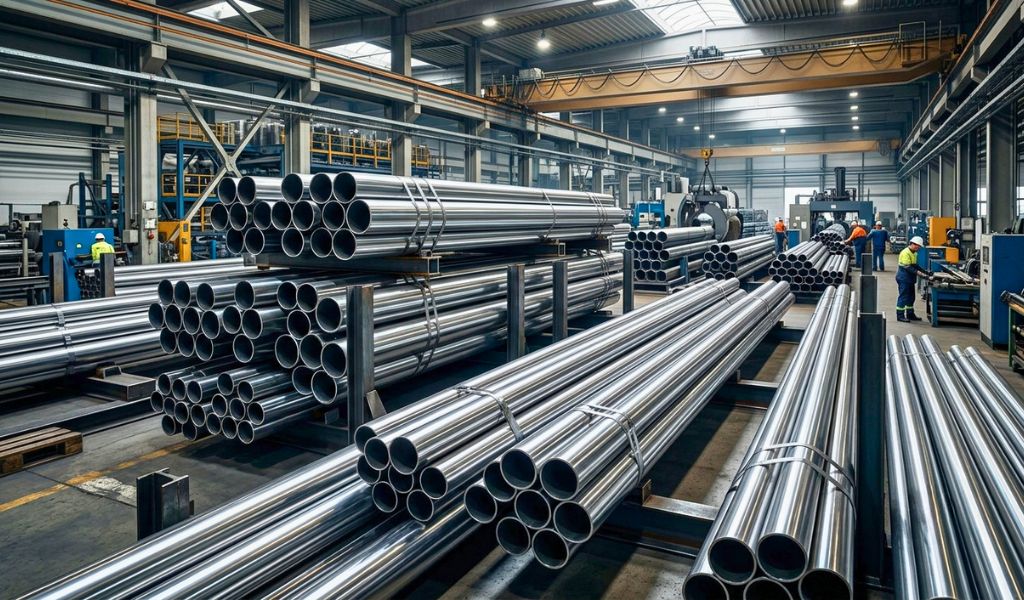
Different pipe configurations serve different purposes. Understanding their characteristics makes the selection process easier.
Hollow Steel Pipes
Hollow steel pipes are widely used in structural and engineering applications. Their hollow cross-section provides an efficient balance between strength and weight.
They are commonly used in building frameworks, support structures, machinery, and fabrication projects.
Structural Steel Pipes
These pipes are designed for applications where strength and structural stability are important. They are frequently used in industrial buildings, infrastructure, and construction frameworks.
Industrial Steel Pipes
Industrial steel pipes are selected according to specific operational requirements, including pressure, temperature, material compatibility, and transportation needs.
The appropriate specification depends on the intended system and applicable engineering standards.
Steel Pipe Size Selection: A Practical Comparison Table
The following table provides a general guide to matching pipe characteristics with project requirements.
|
Project Requirement |
Important Pipe Specification |
Selection Consideration |
|
Building frameworks |
Outside diameter and wall thickness |
Structural loads and stability |
|
Industrial support structures |
Diameter and material grade |
Load-bearing requirements |
|
Machinery fabrication |
Pipe dimensions and tolerances |
Equipment compatibility |
|
Fluid transportation |
Internal diameter and wall thickness |
Flow rate and operating pressure |
|
Outdoor installations |
Material grade and coating |
Weather and corrosion resistance |
|
General construction |
Shape, dimensions and strength |
Design and installation requirements |
Note: Actual pipe dimensions and specifications should be finalised through engineering calculations and relevant standards.
Common Mistakes to Avoid When Choosing Steel Pipes
Even a small specification error can affect project efficiency. Avoid these common mistakes:
-
Ignoring wall thickness: Focusing only on diameter may result in insufficient strength.
-
Overlooking material grade: Different applications require different mechanical properties.
-
Choosing based only on price: Lower upfront costs may lead to higher maintenance or replacement expenses.
-
Ignoring industry standards: Always verify dimensional tolerances and relevant technical requirements.
-
Not checking supplier quality: Inconsistent dimensions or material quality can create installation problems.
Also read: What Steel Pipes Are Suitable for Renewable Energy Projects?
How to Choose a Reliable Steel Pipe Supplier?
Finding the right supplier is just as important as selecting the correct specifications.
Look for a supplier that offers:
-
Consistent product quality and dimensional accuracy.
-
A suitable range of steel products for different project requirements.
-
Clear information about material grades and specifications.
-
Reliable product availability and delivery support.
-
Industry experience and technical product knowledge.
Mitwalli Steel Products Factory Co offers steel product solutions for construction and industrial requirements. Reviewing the available hollow tube options can help project teams identify products that match their structural and fabrication needs.
Conclusion
The selection of the proper steel pipes involves a careful consideration of the diameter, wall thickness, material grade, strength, and the intended use. The best choice is not the biggest or thickest choice, but the one that meets the technical requirements of your project in a safe and cost-effective manner.
If you are planning a construction framework, industrial installation, or fabrication project, comparing specifications before your purchase can save costly mistakes.
Explore the hollow tube product range from Mitwalli Steel Products Factory Co to find suitable steel solutions for your project requirements.
FAQs about Steel Pipes
1. How do I choose the right steel pipe size for an industrial project?
Consider the intended application, required load capacity, outside diameter, internal diameter, wall thickness, and material grade. Consult an engineer to confirm the appropriate specifications.
2. What is the difference between pipe diameter and wall thickness?
Pipe diameter measures the width of the pipe, while wall thickness measures the distance between its inner and outer surfaces. Both influence its performance and strength.
3. What are hollow steel pipes commonly used for?
Hollow steel pipes are commonly used in building frameworks, structural supports, machinery, fabrication, infrastructure, and various engineering applications.
4. Are thicker steel pipes always better for construction?
No. Thicker pipes can offer greater strength in certain applications, but they also increase weight and material costs. The correct thickness depends on structural calculations and project requirements.