The growing demand for renewable energy has increased the need for reliable infrastructure that can support large-scale solar power plants and energy projects. A well-designed steel structure plays an important role in building strong, stable, and long-lasting foundations for solar panels, equipment, and supporting facilities.
Steel is the material of choice for energy infrastructure because of its strength, durability, design flexibility, and ability to withstand demanding environmental conditions. From solar panel mounting systems, to equipment platforms and industrial buildings, structural steel helps project developers to build efficient facilities supporting long-term energy production.
Knowledge of the right materials, components, and construction methods can help businesses make better decisions when planning renewable energy projects.
Quick Summary
-
Steel structures provide strong support for solar panels, equipment, and energy infrastructure.
-
Structural steel components offer durability and design flexibility.
-
Prefabricated steel structures can reduce construction time and on-site labour.
-
Proper material selection and protective coatings improve long-term performance.
-
Reliable steel building systems help meet the requirements of large-scale energy projects.
Why Is a Steel Structure Important for Solar Power Plants?
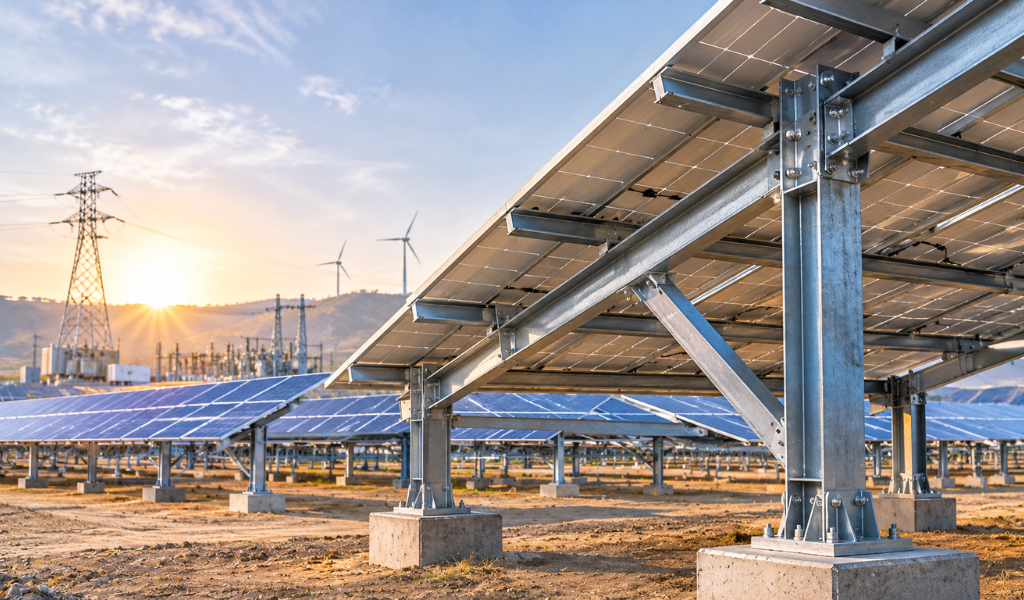
Solar power plants require reliable support systems capable of handling equipment loads, environmental exposure, and operational demands. The strength and stability for these installations are provided by a steel structure.
Here are some important benefits:
1. High Strength and Load-Bearing Capacity
Solar installations must support the weight of the panels, the mounting equipment, and the other electrical components. Steel has good strength-to-weight ratios, making it suitable for designing support structures to withstand these loads.
2. Resistance to Environmental Conditions
Energy projects are often developed in areas exposed to high temperatures, strong winds, dust, and variable weather conditions. Used with appropriate protective coatings, properly specified steel provides resistance to corrosion and assists in preserving structural performance.
3. Design Flexibility
Steel can be manufactured in a variety of shapes and sizes to suit the needs of the project. This makes it ideal for ground-mounted solar arrays, industrial buildings, equipment platforms, and utility infrastructure.
4. Long-Term Cost Efficiency
Although initial material and fabrication costs require careful consideration, steel structures can offer long-term value through durability, easier maintenance, and efficient installation.
Essential Structural Steel Components Used in Energy Projects
Every energy project requires a combination of components designed to provide structural stability and operational support.
Common structural steel components include:
-
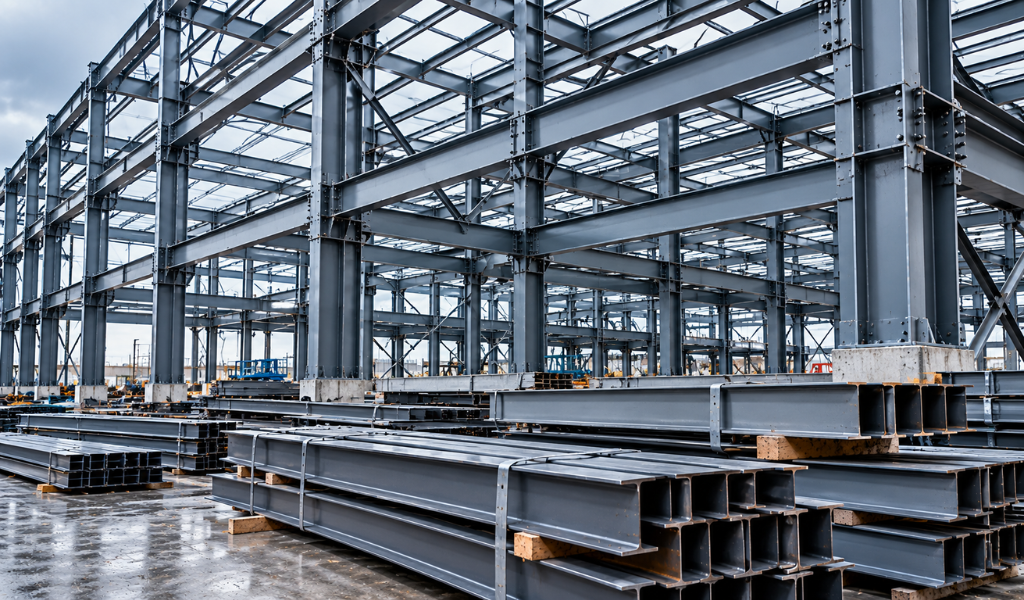
Steel columns: Transfer structural loads to the foundations.
-
Steel beams: Support horizontal loads and connect structural elements.
-
Bracing systems: Improve stability and help resist lateral forces.
-
Purlins: Support roof sheets and other covering materials.
-
Steel plates: Provide connection points and reinforcement.
-
Bolts and connection fittings: Secure different structural elements together.
Selecting the right components depends on the project design, equipment requirements, environmental conditions, and applicable engineering standards.
How Steel Building Systems Support Renewable Energy Infrastructure?
Modern steel building systems offer practical solutions for different energy-related facilities. They can be customised to accommodate operational requirements while maintaining structural strength.
For example, solar power projects may require:
-
Control rooms and electrical equipment buildings.
-
Maintenance workshops and storage facilities.
-
Transformer and inverter support platforms.
-
Industrial sheds for equipment protection.
-
Structural frameworks for auxiliary infrastructure.
A properly engineered structural steel framework also allows project developers to accommodate future modifications and expansions more efficiently.
Prefabricated Steel Structures: Improving Project Efficiency
Construction schedules are important for renewable energy developments. Delays can affect project budgets, installation timelines, and operational planning.
Prefabricated steel structures help address these challenges by allowing structural elements to be manufactured in a controlled factory environment before being transported to the project site.
Key advantages include:
-
Faster installation: Pre-manufactured components can reduce on-site fabrication work.
-
Consistent quality: Factory-based production supports better control over dimensions and fabrication processes.
-
Reduced material waste: Accurate planning and cutting can improve material utilisation.
-
Simplified assembly: Components designed for specific connections can make installation more organised.
-
Scalability: Standardised designs can support future development and expansion.
However, successful prefabrication requires accurate engineering drawings, quality checks, and coordination between manufacturing and installation teams.
Choosing the Right Steel Structure Building Components
Before selecting steel structure building components, project owners should evaluate several technical factors.
-
Load requirements: Consider dead loads, live loads, wind forces, and equipment loads.
-
Environmental exposure: Assess temperature variations, humidity, dust, and corrosion risks.
-
Material specifications: Select appropriate steel grades according to engineering requirements.
-
Fabrication quality: Check cutting accuracy, welding quality, and connection details.
-
Protective treatment: Consider galvanising or suitable coating systems where required.
-
Future expansion: Allow for potential changes in equipment capacity and facility requirements.
Working with an experienced steel manufacturer can help ensure that components are suitable for the intended application.
Comparison of Steel Solutions for Solar and Energy Projects
Different steel solutions serve different purposes. The following table highlights common applications and their practical benefits.
|
Steel solution |
Typical application |
Main advantage |
|
Structural steel framework |
Solar support structures and industrial facilities |
Strength and stability |
|
Steel columns and beams |
Equipment buildings and workshops |
Load-bearing capacity |
|
Prefabricated steel structures |
Utility buildings and industrial sheds |
Faster installation |
|
Steel plates and connections |
Structural joints and reinforcement |
Secure assembly |
|
Steel roof systems |
Equipment protection buildings |
Weather protection |
The final selection should always be based on structural calculations, site conditions, and project specifications.
Also read: What Are the Advantages of Using Steel Structures for Industrial Facilities in Hot Climates?
How to Ensure Quality in Steel Structures for Energy Projects?
Quality control is essential for achieving safe and reliable infrastructure. Even high-quality steel requires proper engineering, fabrication, and installation.
Consider these practices:
-
Verify material certificates and steel specifications.
-
Ensure welding and fabrication follow approved procedures.
-
Inspect dimensions and connections before dispatch.
-
Apply suitable corrosion protection based on site exposure.
-
Follow relevant engineering codes and project requirements.
-
Conduct installation inspections before commissioning.
Working with an established manufacturer such as Mitwalli Steel Products Factory Co can help businesses source steel products and components for industrial and infrastructure requirements.
Conclusion
A reliable steel structure is a crucial component of modern solar power plants and energy infrastructure. Its strength, durability, flexibility, and efficient fabrication make steel a practical choice to support renewable energy developments.
From structural steel components and equipment platforms to complete steel building systems, the right materials and manufacturing partner can affect project performance for years to come.
Businesses planning solar installations or industrial energy facilities should prioritise quality of engineering, material specifications, and fabrication standards. For demanding industrial applications, Mitwalli Steel Products Factory Co can be considered for steel structure building components.
FAQs about Steel Structure for Energy Projects
1. Why are steel structures used in solar power plants?
Steel structures are used because they offer high strength, durability, and design flexibility. They provide reliable support for solar panels, mounting systems, equipment, and associated infrastructure.
2. What are the main structural steel components used in energy projects?
Common components include steel beams, columns, purlins, plates, bracing systems, bolts, and connection fittings. Each component contributes to the stability and strength of the overall structure.
3. Are prefabricated steel structures suitable for solar energy projects?
Yes. Prefabricated steel structures can be suitable for equipment buildings, maintenance facilities, and supporting infrastructure. They can reduce on-site fabrication and help improve construction efficiency.
4. How do steel building systems benefit renewable energy projects?
Steel building systems provide durable and adaptable infrastructure. They can support equipment buildings, electrical facilities, storage areas, and maintenance workshops while allowing future modifications.