One of the most important decisions you’ll make on any fabrication project is the thickness of steel sheets to use. Thickness has a direct impact on the strength, durability, weight, flexibility, and overall performance of a product. Whether you are manufacturing industrial equipment, building components, or metal enclosures, selecting the right thickness will help you achieve reliable results without unnecessary material costs.
But the thickness of steel is dependent on the fabrication project. The choice is influenced by factors such as intended use, load-bearing requirements, environmental conditions, and methods of fabrication. By understanding these considerations, you can decide on the right steel sheets for your project, without compromising quality and cost.
Quick Summary
-
Choose steel sheet thickness according to the intended application and structural requirements.
-
Consider load capacity, durability, and environmental exposure before making a decision.
-
Hot-rolled steel sheets are suitable for heavy-duty and structural applications.
-
Cold rolled steel sheets offer better surface finish and dimensional accuracy.
-
Galvanized steel sheets provide additional protection against corrosion.
Why Does Steel Sheet Thickness Matter in Fabrication?
Steel sheet thickness determines how well a material performs under different working conditions. A sheet that is too thin may bend, deform, or fail under pressure, whereas an unnecessarily thick sheet can increase material costs, weight, and fabrication time.
Selecting the appropriate thickness offers several advantages:
-
Structural strength: Provides sufficient support for the intended load.
-
Durability: Helps prevent premature deformation and damage.
-
Cost efficiency: Avoids spending more on material than necessary.
-
Fabrication flexibility: Makes cutting, bending, welding, and forming easier when the thickness suits the process.
-
Product performance: Supports the safety and reliability of finished components.
How to Choose the Right Steel Sheet Thickness for Your Project?
Before purchasing steel sheets, consider the following factors to make an informed decision.
1. Understand the Application Requirements
Start by identifying how the finished product will be used. Different steel sheet applications have different strength, flexibility, and durability requirements.
For example, industrial machinery housings may require thicker sheets to withstand regular use, while decorative panels and lightweight enclosures may work well with thinner materials.
Consider whether the sheet will be used for:
-
Industrial equipment and machinery.
-
Construction and building components.
-
Storage tanks and fabricated structures.
-
Automotive components.
-
Metal cabinets, panels, and enclosures.
2. Consider Load-Bearing and Strength Requirements
The expected load is one of the most important factors when selecting thickness. Components exposed to heavy pressure, vibration, or repeated mechanical stress may require thicker steel.
For load-bearing applications, consult structural calculations and relevant engineering standards rather than relying on thickness alone. Steel grade, support spacing, design, and fabrication quality also influence the final strength.
3. Choose the Right Type of Steel Sheet
The type of steel affects its suitability for different environments and fabrication processes.
Hot Rolled Steel Sheets
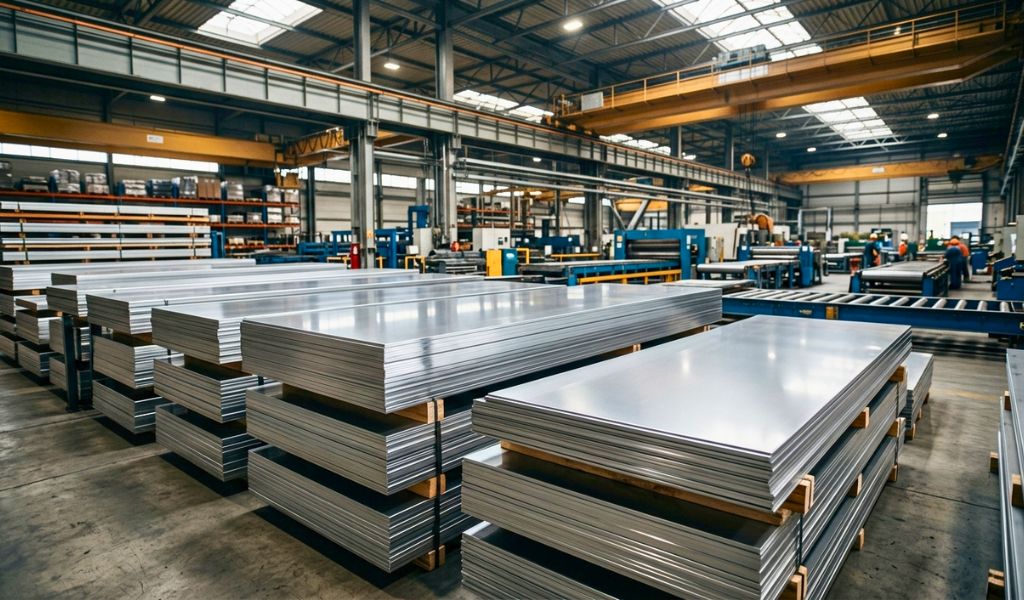
Hot rolled steel sheets are manufactured at high temperatures, making them suitable for applications where strength, workability, and structural performance are important. They are commonly used in industrial fabrication, construction, and heavy-duty components.
Cold Rolled Steel Sheets
Cold rolled steel sheets undergo additional processing at room temperature. They generally offer a smoother surface, closer dimensional tolerances, and a more consistent finish. These properties make them suitable for precision components, cabinets, and equipment enclosures.
Galvanized Steel Sheets
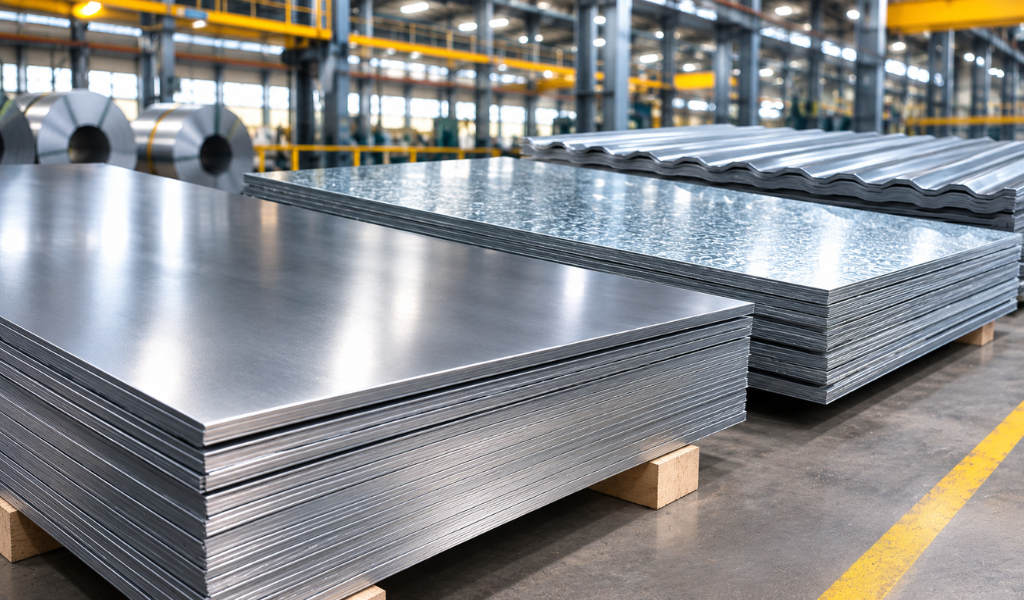
Galvanized steel sheets feature a protective zinc coating that helps reduce corrosion. They are particularly useful in applications exposed to moisture and outdoor conditions, including roofing, ducting, and protective panels.
4. Evaluate Fabrication Methods
Your manufacturing process also influences the thickness you should select.
For example, thinner sheets are generally easier to bend and form, while thicker sheets may require more powerful cutting equipment and specialised welding procedures.
Discuss the following with your fabrication team:
-
Cutting and shearing requirements.
-
Bending radius and forming limitations.
-
Welding methods and joint design.
-
Surface finishing requirements.
-
Available machinery and equipment.
5. Consider Environmental Conditions
Steel components exposed to moisture, chemicals, temperature variations, or outdoor conditions require appropriate material selection.
Galvanized steel can provide additional corrosion resistance, while suitable coatings and protective treatments may improve service life further.
Remember that increasing thickness alone does not necessarily prevent corrosion.
Comparison Table: Which Steel Sheet Type Should You Choose?
|
Steel sheet type |
Main characteristics |
Recommended applications |
|
Hot rolled steel sheets |
Good workability and structural suitability |
Heavy fabrication, construction and machinery |
|
Cold rolled steel sheets |
Smooth finish and dimensional accuracy |
Cabinets, enclosures and precision components |
|
Galvanized steel sheets |
Zinc coating for corrosion protection |
Roofing, ducting and outdoor panels |
Also read: Why Steel Sheets Are Essential for Renewable Energy and Industrial Applications?
Common Mistakes to Avoid When Selecting Steel Thickness
Even a small material selection mistake can affect fabrication quality and project costs. Avoid these common issues:
-
Choosing thickness based only on price: Lower-cost, thinner material may not meet performance requirements.
-
Ignoring the operating environment: Moisture and chemicals can cause corrosion if the material is unsuitable.
-
Overlooking fabrication limitations: Not all equipment can process every thickness efficiently.
-
Ignoring engineering requirements: Load-bearing components should follow appropriate design calculations and standards.
-
Not checking material specifications: Always verify thickness, grade, dimensions, and applicable quality requirements before ordering.
Working with an experienced steel supplier can make material selection easier and help you avoid unnecessary complications.
Conclusion
Choosing the correct thickness of steel sheets requires careful consideration of application requirements, load capacity, fabrication methods, environmental exposure, and budget. Hot rolled, cold rolled, and galvanized options each offer different advantages, so the right selection depends on your project's specific needs
Mitwalli Steel Products Factory Co can assist companies in finding the right answers to their industrial and fabrication needs to ensure the use of reliable materials and quality steel products.
FAQs about Steel Sheet
1. How do I choose the correct thickness of steel sheets?
Consider the intended application, expected load, required strength, fabrication method, environmental conditions, and relevant engineering specifications before selecting a thickness.
2. What are the most common steel sheet applications?
Steel sheets are commonly used in construction, industrial machinery, automotive components, storage tanks, roofing, metal enclosures, and general fabrication.
3. What is the difference between hot-rolled and cold-rolled steel sheets?
Hot-rolled steel sheets are processed at high temperatures and are commonly used for structural and heavy-duty applications. Cold rolled steel sheets offer a smoother finish and better dimensional accuracy for precision fabrication.
4. Are galvanized steel sheets suitable for outdoor applications?
Yes. Galvanized steel sheets have a zinc coating that helps protect the underlying steel against corrosion, making them suitable for many outdoor applications. The required coating specification depends on the exposure conditions.