The Evolution of Steel Manufacturing: Innovations Shaping the Industry Today
Steel manufacturing has come a long way from its early industrial beginnings. It is one of the most groundbreaking and tech-driven, sustainable industries today, creating a framework for infrastructure, transport, energy, and manufacturing of the modern world. With increasing global demand, particularly across the Middle East, the steel manufacturing industry is evolving faster than ever. If a firm or project owner knows how these changes manifest in quality, cost, and longevity and environmental consequences, they can make better decisions.
Knowledge of the latest advancements will give you an upper hand, whether you are sourcing raw materials, looking for similar suppliers, or searching for steel manufacturing companies in Saudi Arabia.
Understanding Steel Manufacturing: From Raw Materials to Modern Techniques
Steelmaking is the process of converting raw materials such as iron ore, coal, scrap and alloys into versatile and high-performing steel goods. The end goal may be similar, but the means and technologies used have changed drastically.
Today, modern steel plants utilize complex automation, AI-based monitoring systems, and sustainable methods to produce high-quality steel manufacturing products more economically than before. Consumers are demanding these features more and more, these advancements reduce waste, lower energy usage, and provide consistent quality.
The Raw Materials for Steel Manufacturing: Building the Foundation
The right raw materials are essential for any good steel product. Today steel mills use a combination of strategic amounts of:
- Iron ore — The fundamental base metal for steel.
- Scrap steel — Recycled metals such as scrap steel that further enable sustainable production processes.
- Coal and coke — Coal or coke used as a fuel or a reducing agent in the process
- Alloys — Elements such as nickel, chromium, and manganese which improve strength, ductility, or corrosion resistance.
In Saudi Arabia, nowadays, many advanced steel manufacturing companies are depending on recycled scrap, thus, decreasing carbon losses and supporting national aims of sustainability.

The Modern Process for Steel Manufacturing: Step-by-Step Overview
The process for manufacturing steel nowadays is much more efficient, controlled, and, in consideration of the environment all the time, than it has been before. The exact methods qualified varies from particular establishment, but the particular modern actions are generally pretty similar:
1. Ironmaking
Blast furnaces or direct reduction plants are then utilized in processing iron ore into molten iron. West Asia, with lower energy consumption and reduced emissions, has been rising direct reduction capacity in Saudi Arabia.
2. Steelmaking
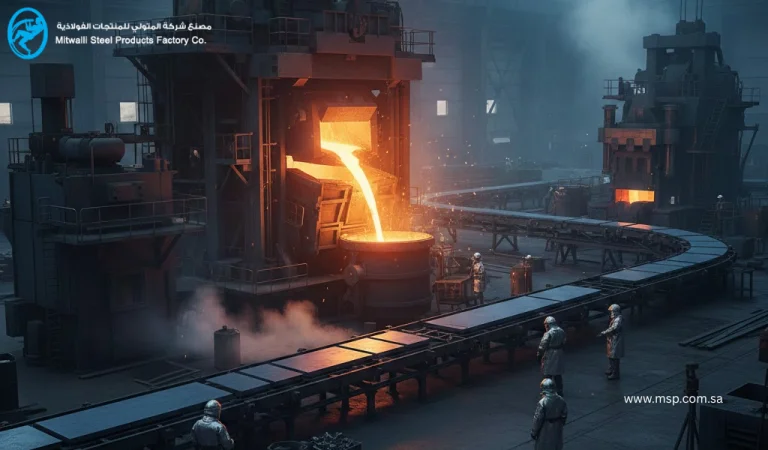
This molten iron is then purified in Basic Oxygen Furnaces (BOF) or Electric Arc Furnaces (EAF).
EAF technology, widely adopted in the region, uses electricity and recycled scrap, making it one of the most sustainable processes today.
3. Casting
Continuous casting systems cast molten steel into billets, blooms, or slabs at a rate that compromises quality and increases the risk of defects.
4. Rolling and Finishing
Steel will be finished – formed into such end goods like the pipes, beams, sheets, tubes, rebar or other custom steel manufacturing goods.
There are accurate dimensions and improved mechanical properties of the rolled materials via automated rolling mills.
Technological Innovations Transforming the Steel Manufacturing Industry
Today, steel is one of the most high-tech industries out there. Key advancements include:
1. Digital Automation and AI
From temperature control to checking the thickness of the product, smart sensors and artificial intelligence supervise everything.
This results in:
- Fewer defects
- Faster production
- Predictive maintenance and reduced downtime
2. Green and Low-Emission Steel
In the wake of worldwide sustainability focus, steel plants are embracing:
- Hydrogen-based steelmaking
- Carbon capture technologies
- Energy-efficient furnaces
- Waste heat recovery systems
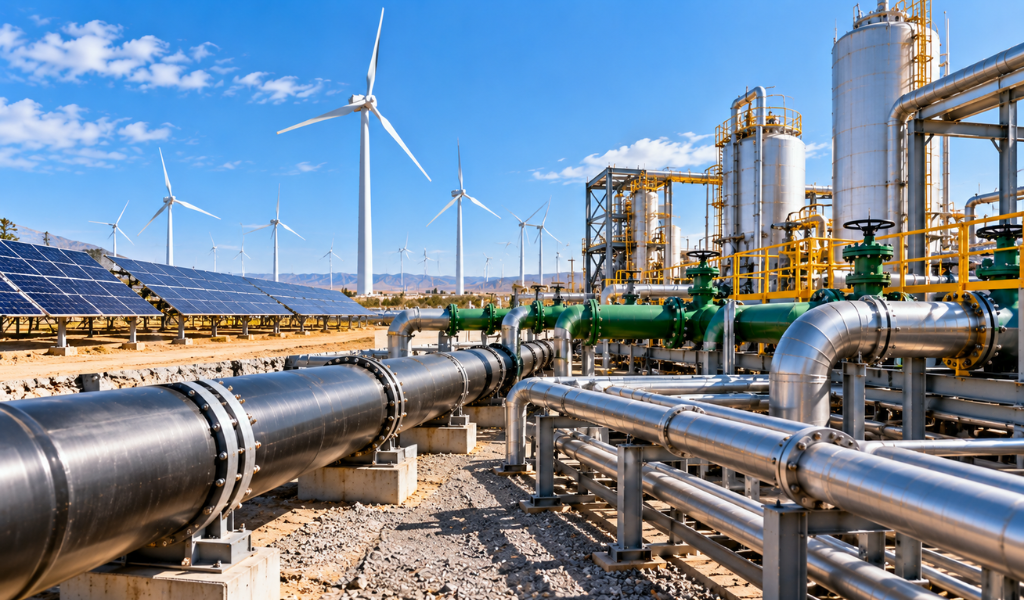
These green transformations are propelled further by Saudi Arabia’s Vision 2030.
3. Advanced Metallurgy
The engineers are developing a new lighter, stronger, and more corrosion-resistant steel grade.
These innovations also serve the infrastructure, high rise, industrial machinery and clean energy sectors.
4. Robotics and Smart Manufacturing
These robotic systems now manage core activities such as heavy lifting, cutting, packaging, and inspections — enhancing workplace safety and the accuracy of production.
Steel Manufacturing Companies in Saudi Arabia: A Rapidly Growing Industry
Today, Saudi Arabia has established itself as one of the dynamic top five iron and steel industries all over the world.
Steel manufacturing companies in Saudi Arabia help bolster the region’s booming construction, transportation, energy, and industrial sectors.
Saudi manufacturers are distinct in their attention to:
- High-quality steel manufacturing products
- State-of-the-art technology
- Sustainable production processes
- Robust logistics and supply chain abilities
- Compliance with international standards
Apart from businesses looking for “steel manufacturing near me,” companies also prefer local companies because they can provide shorter lead times, which provides businesses with stable and reliable suppliers and will save costs.
Types of Steel Manufacturing Products Used Across Industries
Today, steel manufacturers produce very specific materials tailored to a specific use. Common steel manufacturing products include:
- Structural steel beams and channels
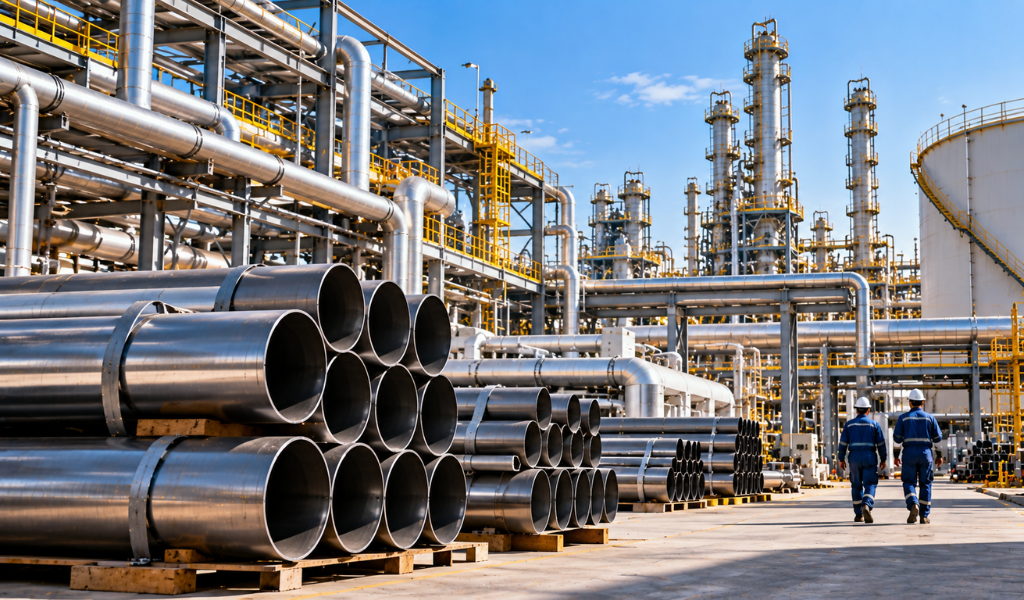
- Steel tubes and pipes
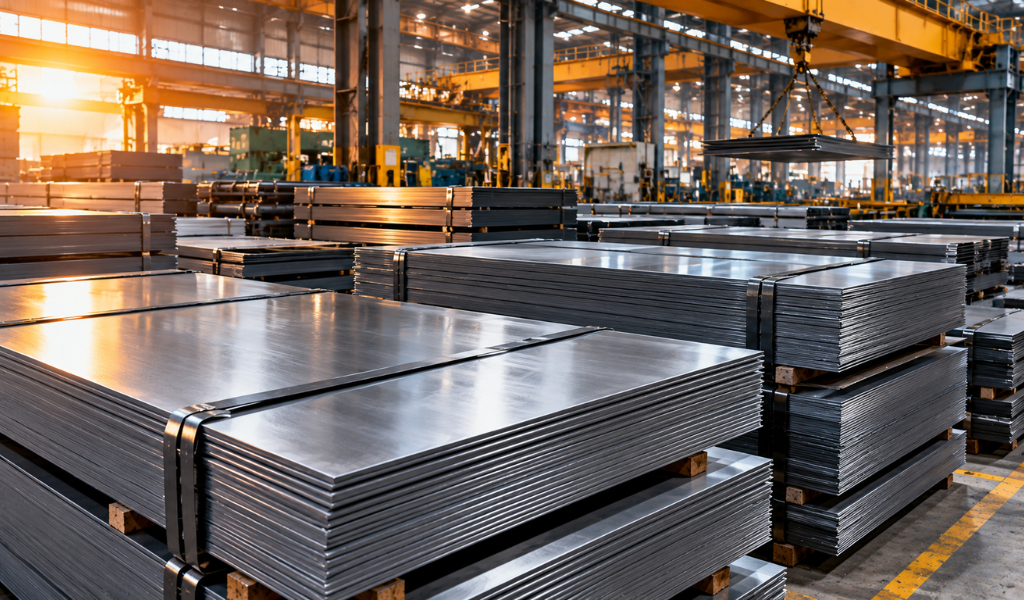
- Steel sheets: Hot rolled and Cold rolled
- Galvanized sheets and coils
- Steel bars and rods
- Steel profiles for industrial use made to measure
You get such products even suitable for large-scale construction and industrial projects where strength, flexibility, corrosion resistance, and endurance are a must as each product goes through rigorous quality checks.
Also read: How to Choose a Reliable Steel Manufacturing Partner in Saudi Arabia?
Why Steel Manufacturing Matters for Today’s Industries?
Steel manufacturing is one of the pillars of industry, providing materials to nearly every economic sector. Steel is used in:
- Skyscrapers and infrastructure
- Oil and gas pipelines
- Manufacturing plants and machinery
- Automotive components
- Energy and renewable projects
- Transportation vehicles
Steel is one of the most preferable construction materials globally due to its versatility, sustainability nature of long service life, recyclability, a high weight-to-strength ratio, among other properties.
Future Trends Driving the Steel Manufacturing Industry
Steel manufacturers are trying to target their attention on:
1. Lightweight High-Strength Steels
Ideal for weight-saving in automotive and aerospace applications, and energy efficiency.
2. Hydrogen-Based Green Steel
This could really help target cutting down carbon emissions.
3. Digital Factories with Real-Time Data
Improved supply chain transparency and quality assurance through smart manufacturing
4. Customized Steel Production
With specific projects not requiring the knowledge of only one steel grades, industries want custom made steel grades.
5. Circular Manufacturing Models
The defining feature of the next era of steel production involves recycling and reusing scrap metal.
Together, these technologies are poised to make steel manufacturing more sustainable, more efficient and more advanced than ever.
Conclusion
A new dawn of global development is being forged from the evolution of steel manufacturing. The Steel Manufacturing industry is constantly changing — be it advanced technologies or sustainable production methods — to adjust to the requirements of contemporary structures and industries. New Processes, better raw materials management, and healthy local suppliers, particularly Steel making companies in Saudi Arabia, the future is bright and sustainable.
For companies considering potential partners or in search of local suppliers, selecting a modern environmentally-conscious steel producer guarantees lasting quality, performance and value delivery.
FAQs on Steel Manufacturing
1. What are the main raw materials for steel manufacturing?
Iron ore, coal or coke, alloys, and recycled scrap metal are the main materials used to produce high-quality steel.
2. How does the modern process for steel manufacturing work?
It involves ironmaking, refining molten steel, casting, and shaping through rolling mills. Today, automation and AI ensure precise, efficient production.
3. Why are steel manufacturing companies in Saudi Arabia growing fast?
Strong construction demand, advanced technology, and increasing sustainability efforts have boosted the region’s steel sector significantly.
4. What steel manufacturing products are most commonly used?
Structural beams, coils, sheets, tubes, and custom steel profiles are widely used across construction, industrial, and transportation sectors.
5. Is modern steel manufacturing environmentally friendly?
Yes. New technologies such as electric arc furnaces, hydrogen reduction, recycling, and energy-efficient systems significantly reduce emissions.